Desiderius Erasmus Quotes
It is an unscrupulous intellect that does not pay to antiquity its due reverence.
Erasmus, Desiderius. The Epistles of Erasmus. Translated by Francis Morgan Nichols, Longmans, Green, and Co., 1901.


In the early 21st century America’s world image, credibility, and popularity had plummeted to new lows. The George W. Bush administration spent millions of dollars on public diplomacy – public relations, propaganda, and image building using the techniques of Madison Avenue to change the world perception of America. Veteran diplomats like Kissinger advised that the Bush was going about it backwards. If America did the right things, world opinion would appreciate it and America’s credibility will follow as it has throughout most of the 20th century. Most foreign politicians and journalists tended to agree. It had been Bush’s policies and practices that had been disliked. They were understood, it was argued, and did not need to be better explained—just changed.


Samuel Langhorne Clemens, 1835-1910. From the point of view of the person or company that bribes or gives campaign contributions to legislators, there has often been a problem that when the heat is on the legislator might begin to refrain from voting as was expected. Twain was joking in this quotation by using the world “morality” to describe the obligation of the legislator to vote for the interest of the briber or campaign contributor. However, there were several major businessmen who actually saw the bribed legislator as having a moral and ethical duty to continue to protect the interest of the briber.


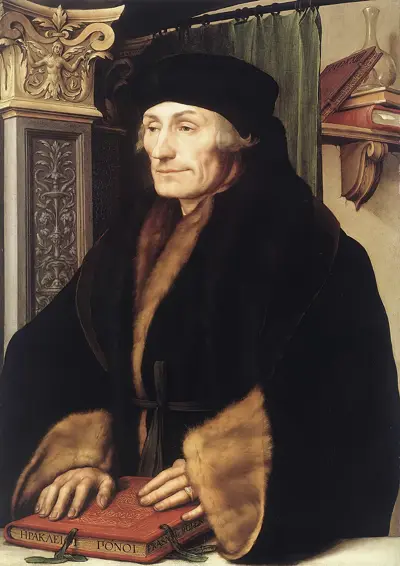
Desiderius Erasmus Roterodamus was a Dutch philosopher and Christian scholar who is widely considered to have been one of the greatest scholars of the northern Renaissance. As a Catholic priest, Erasmus was an important figure in classical scholarship who wrote in a pure Latin style. Among humanists he enjoyed the sobriquet "Prince of the Humanists", and has been called "the crowning glory of the Christian humanists". Using humanist techniques for working on texts, he prepared important new Latin and Greek editions of the New Testament, which raised questions that would be influential in the Protestant Reformation and Catholic Counter-Reformation. He also wrote On Free Will, In Praise of Folly, Handbook of a Christian Knight, On Civility in Children, Copia: Foundations of the Abundant Style, Julius Exclusus, and many other works.
