Sholom Aleichem Quotes
It is an old custom amongst Jewish children, to become war-like on the 'L'ag Beomer.' They arm themselves from head to foot with wooden swords, pop-guns and bows and arrows. They take food with them, and go off to wage war.
Aleichem, Sholom. Jewish Children. Translated by Hannah Berman, Alfred A. Knopf, 1920.


This quotation illustrates one of the more bizarre aspects of the Arab-Israeli conflict. Namely that many of the Arab leaders appear to be in complete denial of what is totally verified historical fact about the Jewish presence and at times rule of much of the Middle East. There were two Jewish Temples built in Jerusalem. The first was the Temple of Solomon of Biblical Fame. Even of one dismisses the Bible as a historical source, the Babylonian records describe the Temple’s destruction in 586 BC. The Jewish Temple was rebuilt by Herod and the governmental records document its construction and other records describe its use and dedication by the Maccabees. The Roman Records completely document the destruction of the 2nd Temple in 70 AD. Arafat, although ridiculed throughout the civilized world, ordered Palestinian Historians to never mention or write about the Jewish Temples. No one knows whether he just did this as a political ploy, or was trying to pander to radical Arabs, or actually believed his statements and was in denial about reality. Outside of some Arabs, no one else believed it.

Joseph ben Matthias. He was referring to the Jewish influence in Science, Medicine, Law, and Philosophy


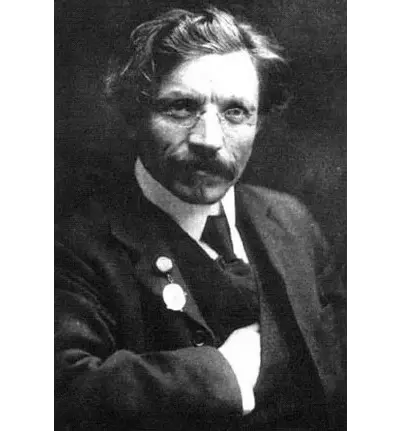
Solomon Naumovich Rabinovich, better known under his pen name Sholem Aleichem (Yiddish and Hebrew: שלום עליכם, also spelled שאָלעמ־אלייכעמ in Soviet Yiddish, [ˈʃɔləm aˈlɛjxəm]; Russian and Ukrainian: Шо́лом-Але́йхем), was a leading Yiddish author and playwright. The 1964 musical Fiddler on the Roof, based on his stories about Tevye the Dairyman, was the first commercially successful English-language stage production about Jewish life in Eastern Europe. The Hebrew phrase שלום עליכם (shalom aleichem) literally means "[May] peace [be] upon you!", and is a greeting in traditional Hebrew and Yiddish.
