Roger B. Taney Quotes
It is an established principle of jurisprudence in all civilized nations that the sovereign cannot be sued in its own courts, or in any other, without its consent and permission; but it may, if it thinks proper, waive this privilege, and permit itself to be made a defendant in a suit by individuals, or by another State.
United States, Supreme Court. Beers v. Arkansas. United States Reports, vol. 61, 1858, p. 529.

This law is the basis of many in the world to this day, including the United States. The law allowed Romans whose property had been unlawfully confiscated to recover from the person who took the property by bringing a case in the Roman Courts. This law exempted the highest public officials from being brought before the courts while they were serving their term of office, but as the quoted clause indicates, these high officials were not above the law and could be summoned to court AFTER their term of office.


Essentially, this case prohibited state courts and judges from interfering with Federal officials doing their duty within a state.


This is the doctrine which allows the government to in effect quash any lawsuit which it claims will disclose any national secrets. This protects information that if released would harm the country or its security posture. At the same time, it allows an administration to terminate embarrassing lawsuits or ones that might uncover government illegality, by claiming that there will be damage to the nation. It is often difficult to separate damage to the nation from damage to a particular administration and government.
Muslims are divided about the role of the Islamic religious courts. Some believed that these should be the only courts and should govern all law, religious and civil on the grounds that there are no real differences in Islam. Others believe, as Jammal put forth, that religious courts should only deal with religious and personal matters. Still others believe that these is no place in modern society for religious courts. This debate echoes the debate that took place in Christianity and Judaism, but the vast majority of these have concluded that there is no place for religious courts
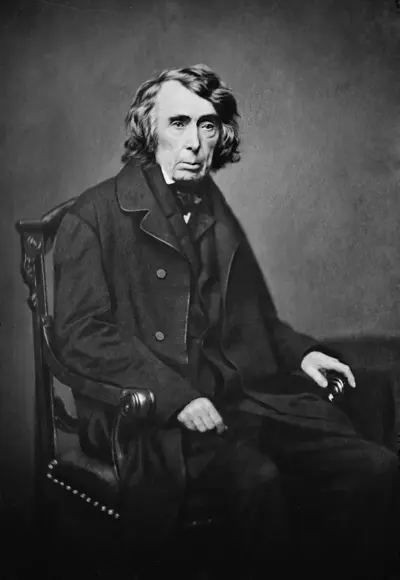
Roger Brooke Taney was the fifth Chief Justice of the United States, holding that office from 1836 until his death in 1864. He delivered the majority opinion in Dred Scott v. Sandford (1856), ruling that African Americans could not be considered citizens and that Congress could not prohibit slavery in the territories of the United States. Prior to joining the Supreme Court, Taney served as the United States Attorney General and United States Secretary of the Treasury under President Andrew Jackson.
