Jawaharlal Nehru Quotes
It is a monstrous imposition to be asked to put up with these treaties of a century and a quarter ago, in the making of which the people had no voice or say…
England had negotiated and signed hundreds of treaties with the many maharajas and others in and regarding India. As India was establishing its own government under Great Britain, they kept running up against old treaties which limited their actions, especially for reform.
Jawaharlal Nehru, 1889-1964, Prime Minister, India, 1939
Sourced by: Eigen's Political and Historical Quotations

Manava Dharma Shastra. This text is a part of the Hindu Holy Texts. Hindus believe that Manu was a prophet whose text is revealed or inspired.

The FLQ was a Quebec revolutionary group seeking Quebec independence from Canada.

The customary technique of the European Powers was to “sign treaties” with the kings of various African territories and provide them with “presents” (bribes). Often the European arms and the active assistance of European soldiers maintained the autocratic power of these leaders. In this case, the British had moved so fast that the “presents” were in a caravan that had not yet arrived.


He was writing about America and many of the industrial democracies who at the time, as a result of globalziation, technology, government action and inaction, and other factors, had gone through a 30 year period of increasing disparities.


The Bank of the Untied States was not a government entity. It was a privately owned. Jackson arranged its demise. See {630653}


1st Earl of Beaconsfield


The President often referred to this statement as an example of his wife’s acumen. She had been born to a Southern plantation and inherited the land and the slaves. Her view, and his, were typical of the Southern point of view in early America.


This was published after he had been murdered by the Afrikaner White South African authorities. The text illustrates his pointed criticisms that had so embarrassed and enraged the apartheid government.


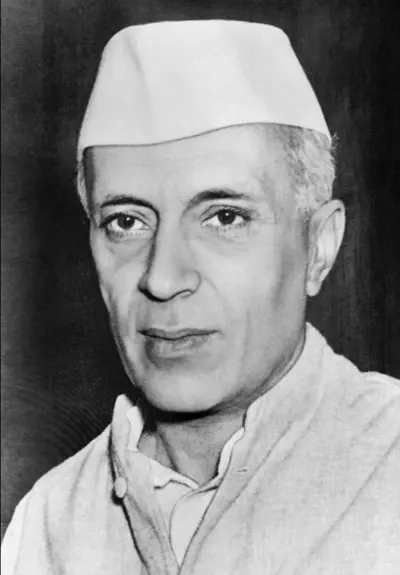
Jawaharlal Nehru was an Indian independence activist and, subsequently, the first Prime Minister of India, as well as a central figure in Indian politics both before and after independence. He emerged as an eminent leader of the Indian independence movement, serving India as Prime Minister from its establishment in 1947 as an independent nation, until his death in 1964. He was also known as Pandit Nehru due to his roots with the Kashmiri Pandit community, while Indian children knew him better as Chacha Nehru (Hindi: Uncle Nehru).
