Jorge Luis Borges Quotes
Islam asserts that on the unappealable Day of Judgment every perpetrator of the image of a living creature will be raised from the dead with his works, and he will be commanded to bring them to life, and he will fail, and be cast out with them into the fires of punishment.
Borges, Jorge Luis. Labyrinths: Selected Stories & Other Writings. Edited by Donald A. Yates and James E. Irby, New Directions, 1962, p. 159.


This Hadith is said to represent the view of the Prophet, Muhammad. In Islam its authority is second only to the Koran itself. This quotation is given by many Muslim Imams to illustrate that suicide of any kind is contrary to Islam. Therefore these imams condemn suicide bombing as un-Islamic. Others—the terrorists—obviously disagree.


Action he advocated to his followers who attacked and killed pro-slavery advocates in Kansas. The civil war of Kansas was over whether Kansas would enter the Union as a slave state of a free state. If a free state, the free states would be able to block further slavery. If Kansas were to become a slave state, the slave states would have a sufficient majority to make all future expansion hospitable to slavery. The slavery forces started sending man and families into Kansas so that they could vote; the abolitionists did the same. Both sides armed and a war began with each faction trying to kill or drive the other faction out of Kansas before the vote. See {617388} and {612516}.


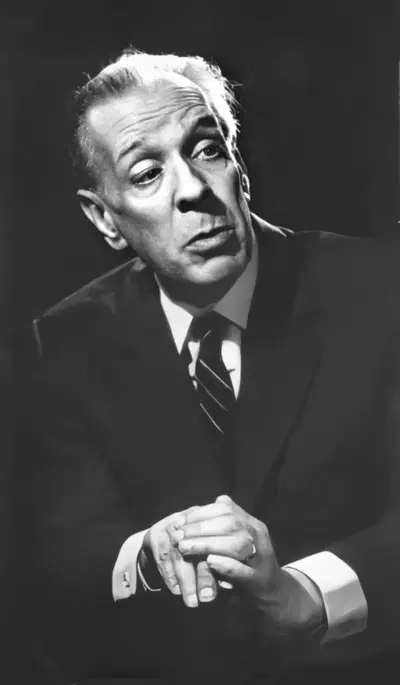
Jorge Francisco Isidoro Luis Borges Acevedo was an Argentine short-story writer, essayist, poet and translator, and a key figure in Spanish-language and universal literature. His best-known books, Ficciones (Fictions) and El Aleph (The Aleph), published in the 1940s, are compilations of short stories interconnected by common themes, including dreams, labyrinths, philosophers, libraries, mirrors, fictional writers, and mythology. Borges' works have contributed to philosophical literature and the fantasy genre, and have been considered by some critics to mark the beginning of the magic realist movement in 20th century Latin American literature. His late poems converse with such cultural figures as Spinoza, Camões, and Virgil.
