Alan Greenspan Quotes
Irrational exuberance
Now famous comment by Greenspan on his view of what was ailing the stock market in 1996.
Irrational exuberance Alan Greenspan, Chairman, Federal Reserve Board, Quoted in The National Interest, Fall 2003
Sourced by: Eigen's Political and Historical Quotations

Arguably, for most of American History, most of the “smartest” people contributed to manufacturing, construction, research and development—activities that produce things that are wanted and/or needed. However, Wall Street began attracting and paying for some of the smartest people in the society, who when they engaged in finance—not only contributed less to manufacturing, but began to create highly complex financial instruments and procedures that few people could understand and with which regulators have difficulty understanding. These and the other schemes of financing have been major factors in the economic problems that have beset the economy including the meltdown of 2008 and the subsequent Great Rescission.

The forecasts that were made by many after the Meltdown of 2008. 5 years later they were almost all wrong—very wrong.


Economics has never been a precise science which is one of the reasons it is called the “dismal science.” In the final analysis economics depends on the behavior of people—rational and irrational.

When the stock market crashed, the Board of Governors was entertaining the idea of putting a syndicate of banks together or back some financiers who would buy up the stock that people were trying to sell. There were those who wanted to sell but no buyers at any price. They concept of a market was being destroyed. Lamont correctly explained that the idea was not practical—it was too late for that. Lamont however had underestimated the market crash and made a feeble effort to assist President Hoover make his feeble effort to get the American economy going again.
This is probably the greatest economic understatement of all time. In one of the great ironic touches of history, this is the gentleman that President Herbert Hoover turned to for advice and strategy of coping with the market crash and the Great Depression. Lamont turned out to be one of the worst strategists and economic planners in history. See {608636}. Nonetheless, note the illustration, Lamont made the cover of Time Magazine

After the American stock market had crashed, Churchill had total confidence that the American economy would rebound and believed therefore that American shares were a bargain. He bought stock in the Simmons Mattress Company.


Three days before the Great Depression Stock Market crash


The phrase “irrational exuberance” has become a catchword for an economic bubble which is in danger of bursting at any moment.


If the economy is strong voters will often ignore of forgive leadership failures. But not in a poor economy.
This may have been the worst stock market advice ever sent to customers. The Great Depression would suppress the economy of more than a decade.
The great scholars were as wrong as everyone else about the Great Depression
Major bankers were not only clueless in the Meltdown of 2008 and the Great Recession that followed, but they were equally hapless in the Market Crash of 1929 and the Great Depression thereafter.


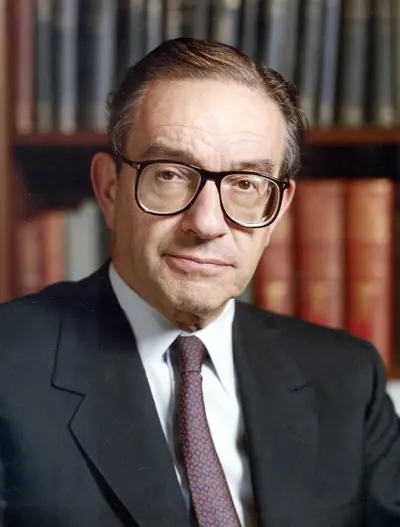
Alan Greenspan is an American economist who served five terms as the 13th Chair of the Federal Reserve of the United States from 1987 to 2006. He works as a private adviser and provides consulting for firms through his company, Greenspan Associates LLC. First appointed Federal Reserve chairman by President Ronald Reagan in August 1987, he was reappointed at successive four-year intervals until retiring on January 31, 2006, after the second-longest tenure in the position (behind William McChesney Martin).
