Jared Diamond Quotes
Infectious diseases introduced with Europeans, like smallpox and measles, spread from one Indian tribe to another, far in advance of Europeans themselves, and killed an estimated 95% of the New World's Indian population.
Diamond, Jared. Guns, Germs, and Steel: The Fates of Human Societies. W.W. Norton & Company, 1997, p. 78.


The white Europeans had over centuries built up immunity to some of the worst infectious diseases but when they first landed in the New World brought smallpox and other deadly diseases to which the Indians had no immunity.


A good example is Malaria. It is spread by mosquitos, mostly in the warmer seasons when they breed in large numbers. If there are longer warm seasons, there will be a longer transmission season and more people will be infected with Malaria. Similar situations exist with many other diseases.


Clinton was a founder of the society. Many sophisticated Americans were in despair about the consequence of White contact with the Indian, and this was even before the worst of the treatment which came later, beginning under the presidency of Andrew Jackson and continuing well into the 20th century. Of particular interest is Clinton’s prescient observations regarding Africa and Africans interacting with whites with slavery the overriding white motive. Clinton was one of the many Americans who were abolitionists from the beginning of the nation.
No one at the time knew the answer to the question but we do today. The colonial whites brought small pox with them to the new world. The whites had many generations of building immunity to small pox so that only a small percentage of whites who contracted the disease would die. The Indians, however, had never before been in contact with small pox and their immune. Their systems had not had the time to evolve resistance to the disease. The same thing occurred with the Spanish conquistadors and the native people in Central and South America only the percentage of death was much higher than the Indians of North America—possibly due to more sexual and other interpersonal contact, possibly climate, and possibly the North American Indians were better nourished and generally healthier to better withstand the disease which wiped out the vast majority of the Indians of Central and South America.
The graphic is the famous Benjamin West painting of the treaty signing between the Lenape Indians and William Penn in 1686. Tenoughan was one of the Indians depicted at the signing but we do not know which one.

Genocide generally means the intentional destruction and elimination of a people. In the case of Columbus and the Spanish Conquistadors, they thought little of the lives of the indigenous people of the New World, but they wanted them for slaves to extract the gold and silver. They wiped out several peoples, mostly as a result of the communicable diseases (mainly smallpox) they brought from Europe for which the South Americans had little or no immunity. Also the size of the invasion forces (the Spanish) was relatively small. The size in land and number of people who they invaded was huge. The Spanish were the worst of the European empires from the point of view of the native colonized people. And Columbus was the trigger. So Chavez has a point in castigating Columbus and the Spanish but, typically, and like many politicians, his oratory lacked the precision of total accuracy.
This quotation shows that man has always had a serious effect on the environment. And that indigenous peoples did not necessarily have a harmonious relationship with nature. A few did, just like some modern humans do, but most did not then as most of us do not now.


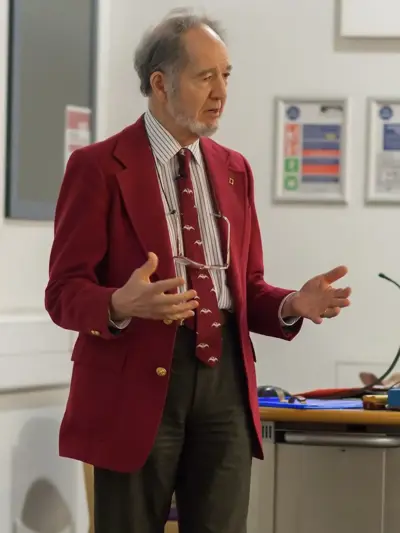
Jared Mason Diamond is an American geographer, historian, anthropologist, ornithologist, and author best known for his popular science books The Third Chimpanzee (1991); Guns, Germs, and Steel (1997, awarded a Pulitzer Prize); Collapse (2005), The World Until Yesterday (2012), and Upheaval (2019). Originally trained in biochemistry and physiology, Diamond is known for drawing from a variety of fields, including anthropology, ecology, geography, and evolutionary biology. He is a professor of geography at UCLA.
