James Joyce Quotes
Christopher Columbus, as everyone knows, is honored by posterity because he was the last to discover America.
Joyce, James. "The City of the Tribes." The Critical Writings of James Joyce, edited by Ellsworth Mason and Richard Ellmann, Viking Press, 1959, p. 229.


Genocide generally means the intentional destruction and elimination of a people. In the case of Columbus and the Spanish Conquistadors, they thought little of the lives of the indigenous people of the New World, but they wanted them for slaves to extract the gold and silver. They wiped out several peoples, mostly as a result of the communicable diseases (mainly smallpox) they brought from Europe for which the South Americans had little or no immunity. Also the size of the invasion forces (the Spanish) was relatively small. The size in land and number of people who they invaded was huge. The Spanish were the worst of the European empires from the point of view of the native colonized people. And Columbus was the trigger. So Chavez has a point in castigating Columbus and the Spanish but, typically, and like many politicians, his oratory lacked the precision of total accuracy.
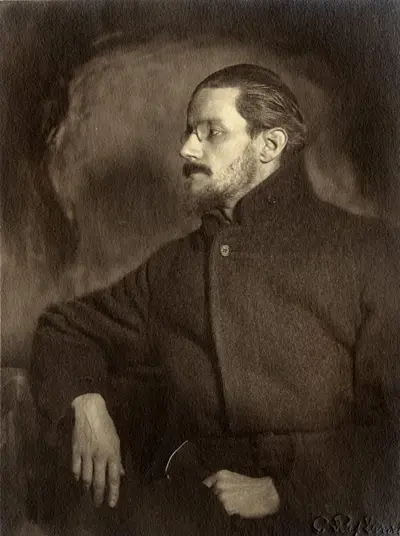
James Augustine Aloysius Joyce was an Irish novelist, short story writer, poet, teacher, and literary critic. He contributed to the modernist avant-garde movement and is regarded as one of the most influential and important writers of the 20th century. Joyce is best known for Ulysses (1922), a landmark work in which the episodes of Homer's Odyssey are paralleled in a variety of literary styles, most famously stream of consciousness. Other well-known works are the short-story collection Dubliners (1914), and the novels A Portrait of the Artist as a Young Man (1916) and Finnegans Wake (1939). His other writings include three books of poetry, a play, his published letters and occasional journalism.
