Daniel Webster Quotes
Inconsistencies of opinion, arising from changes of circumstances, are often justifiable
Daniel Webster, 1782-1852, U. S. Congressman (Federalist, NH & MA) & U. S. Senator (Federalist & Whig, MA), U. S. Secretary of State, Speech, July 25, 1846
Sourced by: Eigen's Political and Historical Quotations


See {627632} for an earlier advocy of change when circumstances warrant and {636175} for a modern view.
Although this quotation has been cited by many scholars, none has yet given a primary citation. As a result a few researchers question the attribution to Keynes and argue that the first primary source of this notion was the Nobel Laureate in Economics Paul Samuelson -- Quote {645739}. However, even Samuelson attributed this quotation to Keynes although he did not do so at this particualr interview.


Patton distrusted planners although he required his staff to create endless plans for almost every possible contingency. His difficulty with “ planners” was that would change modify or replace a plan the instant conditions on the ground did not follow the assumptions of the plan.


The earliest expression of this idea was by the British Economist John Maynard Keynes -- Quotation {610150}


Robert F Kennedy was later was quoted with a similar notion. See {624825}. Voltaire preceded both by over a century {585802} . However, all three of these echo an old Russian proverb. See {615261}.


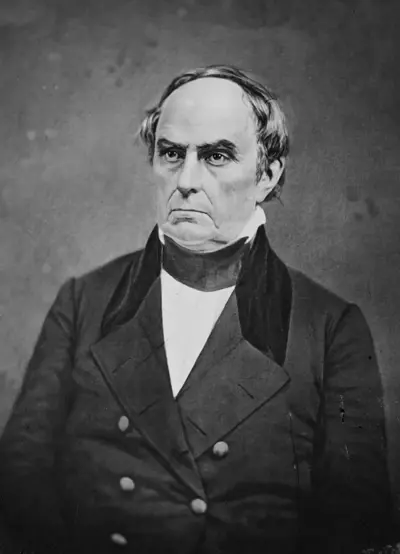
Daniel Webster was an American lawyer and statesman who represented New Hampshire and Massachusetts in the U.S. Congress and served as the U.S. Secretary of State under Presidents William Henry Harrison, John Tyler, and Millard Fillmore. As one of the most prominent American lawyers of the 19th century, he argued over 200 cases before the U.S. Supreme Court between 1814 and his death in 1852. During his life, he was a member of the Federalist Party, the National Republican Party, and the Whig Party.
