Henry Blackwell Quotes
In the present state of society, if every man who seduces a child of 15 leaving her no practical alternative but suicide or a life of prostitution, were promptly put out of existence, the morals of the community would be vastly improved. This girl has had no trial by a jury of her peers. She has been tried, convicted, and sentenced by men alone. If half the jury had been women as should be invariably the case,--if there had been but one woman connected with the trial, no such cruel sentence of capital punishment would have shocked the moral sense of mankind.
The 15 year old Italian immigrant who spoke no English killed the man who raped or seduced her. The case became a New York cause celebre regarding age of consent laws, women on juries, and general female suffrage.
Henry Blackwell, 1825-1909, Abolitionist and Women's Rights Activist, “The Case of Maria Barberi,” Woman's Journal, August 10, 1895
Sourced by: Eigen's Political and Historical Quotations


Note, that like other feminist leaders of the time, she viewed the fetus as a person. However, between the economic pressures and the illegality of birth control devices and information provision, abortion was a critical decision that had to be faced by many women. Later, feminist leadership had to come to grips with the issue of who makes the decision in these areas, and placed the right of the woman to make these decisions, as opposed to husbands, fathers and government, as the highest priority. Then, when the drivers for abortion could not be eliminated, it was women who were criminalized. Feminists then fought for the right of abortion and the right of the woman to make decisions, but feminine leadership has never—in America—been advocates of abortion as opposed to the right of abortion, a subtlety that often is lost.

The editorial was in support of women’s suffrage—the right to vote which at the time women did not have in Britain. Women were very active in protests and demonstrations. Tactics sometimes involved civil disobedience and chaining themselves to public buildings. It was the civil disobedience and disruptions that the newspaper referred to as the “follies and excesses.” In retrospect today, it is amazing how threatened the society felt and how they reacted to the “threat” of females voting. It does however give us a perspective on those contemporary societies which restrict women’s voting rights.


Actually, shortly thereafter some women in Egypt were allowed to be judges, but were not allowed to handle serious criminal cases on the grounds that women could not be hard enough to impose heavy punishment like the death penalty.


SNCC had been formed to promote equality, but race and class were the issues, not gender. Many of the women left SNCC and proceeded separately to start a women’s movement.


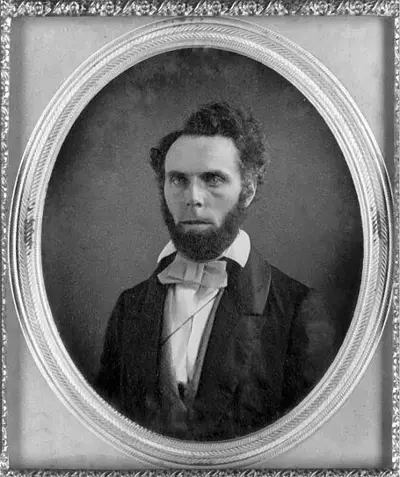
Henry Browne Blackwell, was an American advocate for social and economic reform. He was one of the founders of the Republican Party and the American Woman Suffrage Association. He published Woman's Journal starting in 1870 in Boston, Massachusetts with Lucy Stone.
