Deng Xiaoping Quotes
In the past there were too many portraits of Chairman Mao in China. They were hung everywhere. That was not proper and it didn't really show respect for Chairman Mao.
Deng, Xiaoping. "Answers to the Italian Journalist Oriana Fallaci." Selected Works of Deng Xiaoping, vol. 2, Foreign Languages Press, 1984, p. 326.


Chaing Kai Chek seemed to have the Red Army on the run with far more guns, planes & men. However while Chaing thought he was chasing the Communists, the Red Army traveled through 11 major Chinese provinces, helping the peasants to harvest their crops, build their homes, care for their sick & get indoctrinated in Communist political philosophy. In comparison, the Chaing forces abused the peasants, corruptly stole from them & brought no improvement in their living standard, sense of hope or fairness. Massive retreat became massive victory as so much of China had a Chance to compare the communists with the Kuomintang & unfortunately chose communism as Chaing and the Kuomingtang was such a poor example of capitalism-corrupt, ineffectual and heartless. At the same time, Mao and the other communist leaders were brilliant in their use of the retreating army to improve the lot of the peasants and left their biggest supporters as they were driven to the next province and repeated the process.

This has been the case ever since WWII. In the Great March where the Communists avoided capture by the Nationalists, the army, the party, and many of the people were in a single amalgam living on the move. The positive and fair behavior of the Communist army during the Great March did a great deal to convince the Chinese peasants that the Communists were not corrupt and greedy as were most of the Nationalist officials they ran into. From a strict military point of view, there was little for the Army to do for defense and national security since the overthrow of the Nationalists. So they have been great supporters of development of the nation after the revolution, but by the 21st century had developed some of their own corruption and built companies to produce funds for the army (and some of its leaders personally.


Interestingly Western classical music had a philosophical and ideological place in Chinese Communist doctrine. Cho Enlai—the first Chinese Communist Prime Minister was a great philosophical, cultural, and political supporter of Li Delun’s program to spread Western classical music across China. His program and the rigorous training of Chinese musicians in Western classical music and instruments even survived the Cultural Revolution when everything else from the West was attacked. By the 21st century, the best classical musicians in Europe, Canada and the United States included Chinese musicians in almost every instrument and Western musical era.

The early revolutionary Chinese Communists had a much more democratic and civil-liberties oriented view of government than after the had won and gained control of China. Then the problems were so enormous with such meager resources that the insecurity of the party government let to a civil rights flip flop and a politically authoritarian government. Stability is today the most important priority for the Chinese Communist party so that free speech, protests and other civil liberties are curtailed. Economic development is the more important activity and political development is lagging, but while economic development is racing ahead, Chinese political development improves only slowly. Dissidents like Liu Xiaobo are pushing the process.
Many American ideologues assumed that the Chinese Communist Revolution would lead to an economic collapse. They did not realize that historically a competitive business economic system had been operational in the Chinese culture for thousands of years. In reality the economy was however really being suppressed somewhat by the Mau style of communism. When Deng loosened up the economic rules in China, their “Communist” system not only functioned as it had under Mao, but then thrived and China became a world economic power in just a relatively few years.


It has been argued that Asian Cultures where Confucianism is in the tradition are more obedient and respectful of authority figures than are most other cultures and religious traditions.

Stalin decided not to help the Republicans in Spain—even his fellow communists.
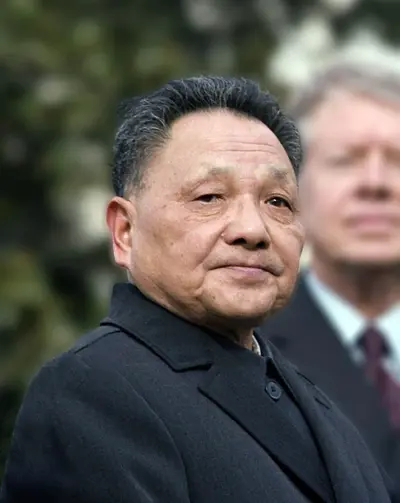
Deng Xiaoping was a Chinese revolutionary and statesman who served as the paramount leader of the People's Republic of China (PRC) from December 1978 to November 1989. After Mao Zedong's death in 1976, Deng gradually rose to supreme power and led China through a series of far-reaching market-economy reforms, earning him the reputation as the "Architect of Modern China".
