Umberto Eco Quotes
In the Middle Ages, cathendrals and convents burned like tinder; imagining a medieval story without a fire is like imagining a World War II movie in the Pacific without a fighter plane shot down in flames.
Eco, Umberto. Postscript to The Name of the Rose. Harcourt Brace Jovanovich, 1984.


This is a significant quotation because the bombing of Hamburg was somewhat controversial. The Germans had bombed Warsaw, London and many other cities contravening the them accepted laws of war. The allies retaliated by bombing German cities where there was extensive war manufacturing; however, there were some allied war planners who saw the bombing of German cities as a way of breaking morale and shortening the war above and beyond the damage to the factories. A new technique had been used in bombing Hamburg—firebombing. Many thousand coordinated incendiary bombs ignited fires throughout the city which combined into a huge firestorm, killing even people with heat that were in air raid shelters. More than 100,000 Germans died—a greater toll than would later take place at Hiroshima and Nagasaki. There was some allied criticism that the firebombing just killed people but made the survivors even more adamant about continuing the fight, This quotation, from a leading German officer, supported the view that there was a strong positive military effect. The technique was repeated in Tokyo to even greater effect before the atomic bombed were ready. (The Japanese had also bombed civilian cities first as well as committed other atrocities.


At first reading, this is just a common report of a German war correspondent riding along on a bombing mission. However what makes it a very important historical quotation is the description of the fires and the date. In WWII the allies firebombed Hamburg {624722} and Dresden, and were then accused by the Germans—and by some historical revisionists in the 21st century—of bombing civilian cities and using the firbombing technique where one huge conflagrant sucked the air out of the area and roasted even people in bomb shelters. However, it was clear that the Germans had started the bombing of civilian cities, but the firebombing was less clear. This quotation proves that it was the Germans who first broke the rules of war and that made the subsequent Allied use of the technique legal and for most people then moral.


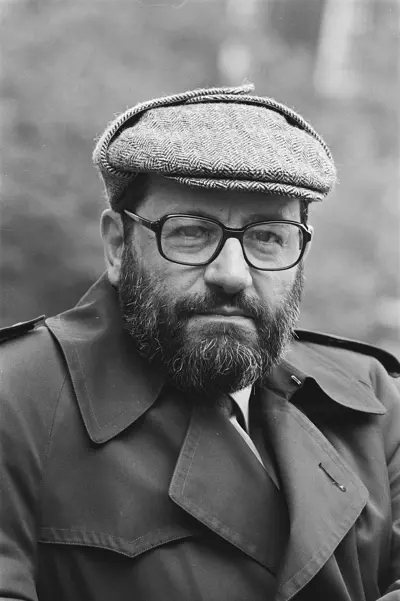
Umberto Eco OMRI was an Italian medievalist, philosopher, semiotician, cultural critic, political and social commentator, and novelist. In English, he is best known for his popular 1980 novel The Name of the Rose, a historical mystery combining semiotics in fiction with biblical analysis, medieval studies, and literary theory, and Foucault's Pendulum, his 1988 novel which touches on similar themes.
