Ernie Pyle Quotes
It was a night when London was ringed and stabbed with fire.
Pyle, Ernie. Ernie Pyle in England. Robert M. McBride & Company, 1941, p. 227.

He was warning the majority and blaming them for what was to happen. Ironically, at the end of the First World War, Germany was so harshly treated because the allies felt that the Germans had been aforewarned not only by others but by opposition Germans as well.

At first reading, this is just a common report of a German war correspondent riding along on a bombing mission. However what makes it a very important historical quotation is the description of the fires and the date. In WWII the allies firebombed Hamburg {624722} and Dresden, and were then accused by the Germans—and by some historical revisionists in the 21st century—of bombing civilian cities and using the firbombing technique where one huge conflagrant sucked the air out of the area and roasted even people in bomb shelters. However, it was clear that the Germans had started the bombing of civilian cities, but the firebombing was less clear. This quotation proves that it was the Germans who first broke the rules of war and that made the subsequent Allied use of the technique legal and for most people then moral.


The threat was if Pakistan did not cooperate with the United States after the September 11 attack. Pakistan was full of Islamic fundamentalists with strong ties to the Taliban and other terroristsw. Pakistan did cooperate as a government but the Musharraf government itself was under attack by the Islamic Fundamentalists who tried to assassinate Musharraf a number of times. Armitage has denied that he said such a thing, but he does admit a conversation where he told them that “they were with us or against us.”


The President was also getting ominous news from England. See {41111}


During the American Revolution, the Iroquois sided with the British, aiding them militarily and other ways. The revolutionaries responded by attacking and destroying most of the Iroquois who retreated to British Canada.


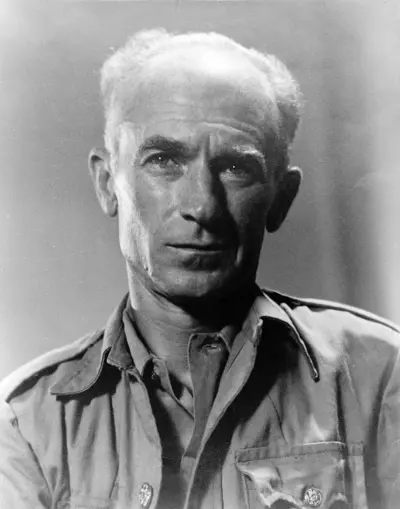
Ernest Taylor Pyle was a Pulitzer Prize—winning American journalist and war correspondent who is best known for his stories about ordinary American soldiers during World War II. Pyle is also notable for the columns he wrote as a roving human-interest reporter from 1935 through 1941 for the Scripps-Howard newspaper syndicate that earned him wide acclaim for his simple accounts of ordinary people across North America. When the United States entered World War II, he lent the same distinctive, folksy style of his human-interest stories to his wartime reports from the European theater (1942–44) and Pacific theater (1945). Pyle won the Pulitzer Prize in 1944 for his newspaper accounts of "dogface" infantry soldiers from a first-person perspective. He was killed by enemy fire on Iejima (then known as Ie Shima) during the Battle of Okinawa.
