Tom Hooper Quotes
In 'The King's Speech,' patriotism is utterly contained within a historical moment, the third of September, 1939, where the aggressor is clear, the fight is clear, it hasn't become complicated over time.
Hammond, Pete. "Oscar Q&A: 'The King's Speech' Director Tom Hooper." Deadline, Penske Media Corporation, 3 Feb. 2011.

Ford was a great admirer of Adolf Hitler who thought Ford was the greatest of the Americans. He was an inveterate Fascist—racism and all. He vehemently opposed United States entry into WWII against the Nazis. He was awarded a medal by Hitler, and he had no qualms about taking it.

Although a member of the Prime Minister’s party and Cabinet, Cooper was so outraged that he called for Chamberlain’s resignation leading to Winston Churchill becoming Prime Minister.

“Lord Haw Haw” was the name that he used in his propaganda broadcasts from Germany to England. Despite the fact that the broadcasts were anti-British and pro German, many in Britain listened to him regularly. He was very witty and many of his criticisms of British society were views held by many patriots in Britain. As pure entertainment, he was better than most of the BBC broadcasts during WWII. At the end of the war, Joyce was captured, tried and executed for treason.

This speech to over 100,000 people galvanized the Indian nationalists They had been asking the British to change the constitution to give India more independence. Churchill was opposed to any policy that would diminish the British Empire, but needed the Indians as men of India served in the British Army in every major theater of WWII. So instead of saying "No" Churchill held out the possibility but at a later time. He argued that it was inopportune to alter the Constitution in the midst of a world war.


This quotation shows the level of denial that De Valera and other Irish leaders were in over Nazi Germany. See {639721} for other Irish Free State denial. Over 70,000 Irishmen and women rejected the moral stand of their government, and volunteered for the British Army to the great distress of the Free State leaders like De Valera.


A little over a decade later the struggle began.

She, like her husband and many of the America Firsters, believed that Hitler should be allowed to overrun Europe and Russia. See {613688}. The America First group was a pro-fascist organization who supported the axis powers until they declared war on the United States. Even then, there were some Nazi sympathizers who were anti-immigrant, racist and anti-Semitic in addition to being fascists. Both of the Lindberghs were America Firsters

He had been asked about the so called American “atrocities” for the bombing of North Vietnam targets. For this response Denton was tortured even more than he had been before which he disclosed on the television by blinking his eyes in Morse Code spelling TORTURE.


Hopkins was a social worker with no military of political experience. But the President trusted him implicitly. Most American military officers and Ambassador to England Joseph P. Kennedy, a Nazi sympathizer & father of JFK, believed that England could not stand up to Hitler. Any military aid we gave England would fall into the hands of the Germans. Everyone was shocked when Roosevelt sent Hopkins to England to make a military recommendation. To impress Hopkins with something he thought Hopkins would be interested in, Churchill led a tour of workers cottages built by the government. Hopkins surprised Churchill and his aids who would never forget this statement & then asked to see the military facilities. Hopkins distressed the American military by recommending that Britain could hold out against invasion if they received military aid. Despite the contrary military advice, FDR accepted Hopkins’ recommendations, and the rest is history. He had been right and much of the military wrong.


Theodore Roosevelt was the Presidential nominee

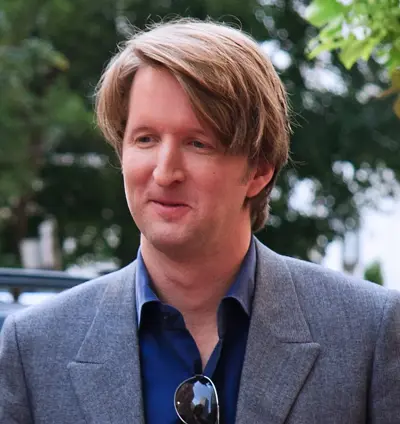
Thomas George Hooper is a British-Australian film and television director and producer. Hooper began making short films as a teenager and had his first professional short, Painted Faces, broadcast on Channel 4 in 1992. At Oxford University, Hooper directed plays and television commercials. After graduating, he directed episodes of Quayside, Byker Grove, EastEnders, and Cold Feet on British television.
