Tim Buck Quotes
In the course of waging that war, the people of Canada had shown that it was possible for them to maintain nearly a million men in uniform and at the same time expand all the facilities for production within Canada at an unprecedented speed, including building industries which had never existed in Canada before... and by and large the cost of production in Canada compared favorable with the cost of production anywhere else among the Allies... All of this was accomplished without any foreign investment, without and foreign loans... We were quite capable of self-development.
Canada and the United States were the only allies who could handle WWII economically. In all fairness, there were no battles fought on North American soil and no loss of industrial or agricultural capacity.
Timothy ‘Tim’ Buck, 1891–1973, Communist Party Leader of Canada, A Conscience for Canada
Sourced by: Eigen's Political and Historical Quotations

Shortly after the Cuban revolution, the U. S. placed an embargo on the Fidel Castro regime. Medicine was one of the critical items that hurt Cuba the most. However, the Cubans, facing the problem of inability to import any U. S. patented medicinals, moved to a two pronged approach to health care. First since the could not get the medicines for the ill people, the places an enormous emphasis on preventive medicine which U. S. medical experts have always advocated, but America has been slow to implement. The second effort was to create their own drug research and manufacturing industry. They were amazingly successful at both even as the rest of the communist regime was crumbling. At the time of this quotation, Cubans had a HIGHER average lifespan than Americans, and the Cuban drug industry had become the 3rd largest in Cuba earning hard currency for the country. The had over 200 international patents on medicines and were selling to 57 countries.


This same argument was used before and since to justify protecting domestic manufacturing from foreign competition until it can mature sufficiently to compete in a global economy. One difficulty occurs if protective tariffs are imposed for this reason. The manufacturers protected never seem to reach the point where they can compete without the subsidy.


Benito Juarez Government. The United States initially supported the Mexican Republicans (as opposed to the French puppet Emperor Maximilian) with investments and loans (see {605684} ) as well as weapons smuggling. See {44430}.


The word “proprietor” at the time meant someone who had title to land. The title was then almost always tied up with the aristocratic titles. “Great proprietors” were therefore nobles who owned and controlled large land holdings. The “improvers” tended to be the businessmen—especially the manufacturers and the transportation magnates. Large landowners could just make money by renting parts of their land to tenant farmers. They needed no capital, no vision, not much skill or talent, and they didn’t have to take any risks.

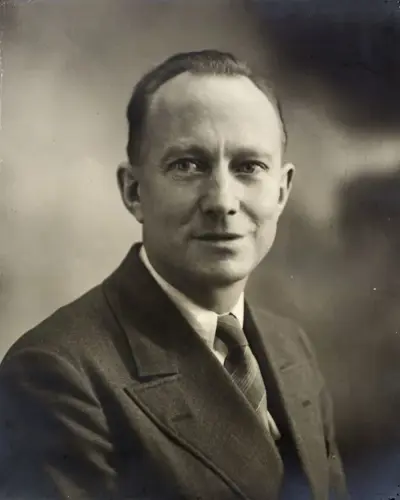
Timothy Buck was a long-time general secretary of the Communist Party of Canada (known from the 1940s until the late 1950s as the Labor-Progressive Party) from 1929 until 1962. Together with Ernst Thälmann of Germany, Maurice Thorez of France, Palmiro Togliatti of Italy, Earl Browder of the United States, and Harry Pollitt of Britain, Buck was one of the top leaders of the Joseph Stalin-era Communist International.
