Benito Juarez Quotes
I will be greatly pleased if the venture capitalists you have referred to would come here and invest part of their wealth in industrial enterprise, extending by that means the bonds of fraternity between the two republics and linking their identities by means of the same democratic institutions.
Benito Juarez, 1806-1872, Mexican President, Letter to William Stark Rosecrans, U. S. Ambassador to Mexico, January 1870
Sourced by: Eigen's Political and Historical Quotations

Benito Juarez Government. The United States initially supported the Mexican Republicans (as opposed to the French puppet Emperor Maximilian) with investments and loans (see {605684} ) as well as weapons smuggling. See {44430}.


There were many Americans and Mexicans who believed that the conquest of all of Mexico was well under way, our having earlier obtained Texas, New Mexico, Colorado, California, and Arizona.

The first non-PRI President in over 70 years.


This was the classic weakness of colonies where the colonial power was only interested in importing a raw material—in this case, gold. Everything else tends to be ignored—even today. With independence, things often do not change and the export of raw material like oil, tin or lumber dominates the whole economy to the exclusion of the rest of the economy

During the revolution against apartheid, a number of communist organizations allied themselves with the ANC against the White minority regime. A few of the communist leaders rose and became officials of the ANC. The vast majority of the ANC supported private enterprise with the kind of socialist aspects that were then typical of the Scandinavian countries, Germany and even France. Mandela, before the successful ousting of the Apartheid held a number of communist ideas and principles as the “capitalists” were making money from the apartheid system and there would support the status quo, However, he had a change of heart and mind regarding private enterprise after the successful effort to end white minority rule. He was good to his word, and even after he retired, the ANC and the government maintained pro private enterprise policies.

Canada and the United States were the only allies who could handle WWII economically. In all fairness, there were no battles fought on North American soil and no loss of industrial or agricultural capacity.


The United States was desirous of providing assistance to the Benito Juarez Republican government of Mexico. Both governments were desirous of American foreign investment in Mexico. However, the Juarez government was not in real control of Mexico. State and local government, many corrupt, seized foreign owned business property, reneged on agreements. Others tried to regulate some of the abusive labor employment practices that some American firms had practiced. But little of this, both reasonable and not, was with the consent and even knowledge of the Mexican national government. Capen’s basic observation, so relevant to economic development in modern times was prescient and fundamental to the development of the third world and even the former Soviet Union. If there is insufficient government protection for business, then the high risk will drive out investors who would take reasonable returns. The only investors would then require very high returns, which themselves would inhibit the very growth and development that we want to stimulate.


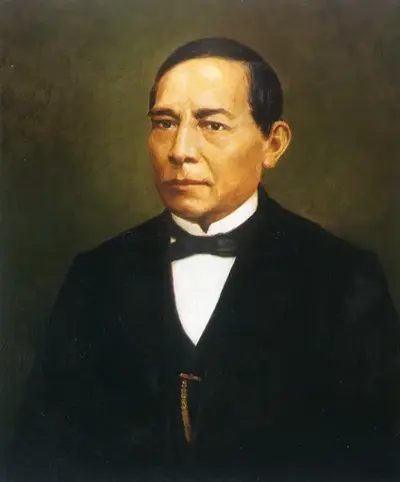
- Born: March 21, 1806
- Died: July 18, 1872
- Nationality: Mexican
- Profession: Lawyer
Benito Pablo Juárez García was a Mexican lawyer and politician, who served as the 26th president of Mexico from 1858 until his death in 1872. He was the first president of Mexico who was of indigenous origin. Born in Oaxaca to a poor Zapotec rural family and orphaned young, he moved to Oaxaca City at the age of 12 to go to school. He was aided by a lay Franciscan, and enrolled in seminary, later studying law at the Institute of Sciences and Arts and becoming a lawyer. After being appointed as a judge, in his 30s he married Margarita Maza, a socially prominent woman of Oaxaca City. From his years in college, he was active in politics. Appointed as head justice of the nation's Supreme Court, Juárez identified primarily as a Liberal politician. In his life, he wrote briefly about his indigenous heritage.
