Aristotle Quotes
In the case of some people, not even if we had the most accurate scientific knowledge, would it be easy to persuade them were we to address them through the medium of that knowledge; for a scientific discourse, it is the privilege of education to appreciate, and it is impossible that this should extend to the multitude.
Aristotle. Art of Rhetoric. Translated by J. H. Freese, Harvard University Press, 1926, p. 1355a.


Bethe was the head of the Theoretical Division of Los Alamos and was one of the Senior Scientists who developed the Atomic Bomb.

In September, 2007, Vitter earmarked $100,000 in federal money for a Christian group, the Louisiana Family Forum, known for challenging evolution by means of "teaching the controversy" which promotes intelligent design. When the earmark became public, other legislators pressured Vitter to withdraw is earmark which he did in October of 2007. Vitter had been a major opponent of spending federal money for education, but made an exception for this project. Vitter’s hypocrisy extended to his own behavior as well. See {625898}.


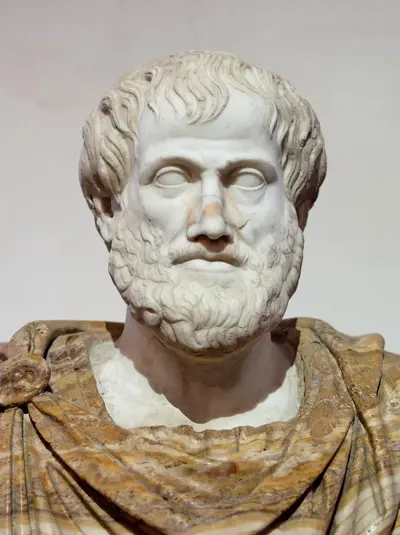
Aristotle (/ærɪˈstɒtəl/; Greek: Ἀριστοτέλης Aristotélēs, pronounced [aristotélɛːs]; 384–322 BC) was a Greek philosopher and polymath during the Classical period in Ancient Greece. Taught by Plato, he was the founder of the Lyceum, the Peripatetic school of philosophy, and the Aristotelian tradition. His writings cover many subjects including physics, biology, zoology, metaphysics, logic, ethics, aesthetics, poetry, theatre, music, rhetoric, psychology, linguistics, economics, politics, meteorology, geology and government. Aristotle provided a complex synthesis of the various philosophies existing prior to him. It was above all from his teachings that the West inherited its intellectual lexicon, as well as problems and methods of inquiry. As a result, his philosophy has exerted a unique influence on almost every form of knowledge in the West and it continues to be a subject of contemporary philosophical discussion.
