Matthew Arnold Quotes
… science and systematic knowledge is wanting to our whole instruction alike, and not only to that of our business class ... In nothing do England and the Continent at the present moment more strikingly differ than in the prominence which is now given to the idea of science there, and the neglect in which this idea still lies here; a neglect so great that we hardly even know the use of the word science in its strict sense, and only employ it in a secondary and incorrect sense.
Matthew Arnold, 1882-1888, English Poet and Critic, Schools and Universities on the Continent, 1868
Sourced by: Eigen's Political and Historical Quotations


Bethe was the head of the Theoretical Division of Los Alamos and was one of the Senior Scientists who developed the Atomic Bomb.


Ataturk as part of his radical reforms elevated secular teachers to a very high social status and moved science and engineering into the curriculum over the objections of traditionalists and Islamic fundamentalists, and he did this in an overwhelmingly Muslim country.


In September, 2007, Vitter earmarked $100,000 in federal money for a Christian group, the Louisiana Family Forum, known for challenging evolution by means of "teaching the controversy" which promotes intelligent design. When the earmark became public, other legislators pressured Vitter to withdraw is earmark which he did in October of 2007. Vitter had been a major opponent of spending federal money for education, but made an exception for this project. Vitter’s hypocrisy extended to his own behavior as well. See {625898}.

The problem effects politics in that politicians and their staffs who have to understand critical concepts cannot even read up on the subject very deeply unless they have experience with the technical vocabulary of the specific field. The result is that are dependent on experts and are unable to reach conclusions for themselves.


1st Earl of Beaconsfield
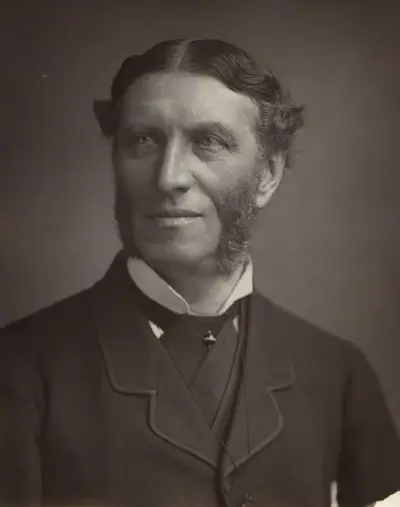
Matthew Arnold was an English poet and cultural critic who worked as an inspector of schools. He was the son of Thomas Arnold, the celebrated headmaster of Rugby School, and brother to both Tom Arnold, literary professor, and William Delafield Arnold, novelist and colonial administrator. Matthew Arnold has been characterised as a sage writer, a type of writer who chastises and instructs the reader on contemporary social issues. He was also an inspector of schools for thirty-five years, and supported the concept of state-regulated secondary education.
