Jacob J. Lew Quotes
In the budget, the president will call for a five-year freeze on discretionary spending other than for national security. This will reduce the deficit by more than $400 billion over the next decade and bring this category of spending to the lowest share of our economy since Dwight Eisenhower was president.
Lew, Jacob J. "The Easy Cuts Are Behind Us." The New York Times, 13 Feb. 2011.


In 1964 the treasury secretary asked the president how to sell the proposed budget to Congress:

This quotation pithily summarizes a common problem in politics of describing budgets. In most years there has been a national inflation. If a new budget is, in actual dollars, the same as the previous years or a little more, but the increase is less than the inflation level, the agency will not be able to provide the same level of services as the previous year. Therefore services will be cut and those who are politically in favor of more money for the program legitimately describe this as a “budget cut”. Opponents of larger funding increases, also legitimately describe the funding as a “budget increase”. One side refers to what the money can buy and the other, to the absolute dollars spent. This is an example of the classical ambiguity of political oratory.


After many years of deficit financing, Clinton finally produced a balanced budget and together with his Secretary, of the Treasury, Robert Rubin, actually developed an economy which was producing a huge annual surplus that would soon eliminate the national debt. However, when George W. Bush replaced Clinton after two terms, Bush was unable to manage the budget any better than the other aspects of the Presidency. He cut taxes dramatically and even after it was clear that the Clinton surplus was squandered, he continued tax reductions and even increased them while increasing government spending creating the biggest government in history and went from our largest surplus to our largest deficit in his 8 years.

The Clinton budget was a very unusual one. He and Treasury Sectary Robert Rubin determined that the large deficit built up in the previous administrations and the high interest rate were competing with the private sector for investment capital. Therefore the budget raised taxes and took other steps to reduce the largest deficit then in American History. Virtually all of the Republicans saw disaster for the economy with this budget and even some of the fiscal conservatives from Clinton’s own party were opposed. The budget passed by a single vote in the House, and that started the largest economic growth period in American History. The economy became so strong that Clinton was able to produce a balanced budget, eliminate the Reagan deficit and produce more new jobs than any administration in American history. The prediction that the budget would cause the country to fail was, not only wrong, but the budget caused the nation to succeed, beyond what any thought possible. See {626772} for one of the warnings from his own party.

After the Stock Market crash of 1929, Republican politicians promised "recovery is right around the corner." But La Guardia disagreed:
_0_thumbnail_47x47.jpg "Bill White, Mayor of Houston, Texas")
The national debt ballooned under Reagan, but the same terrible combination was implemented by President George W. Bush also.


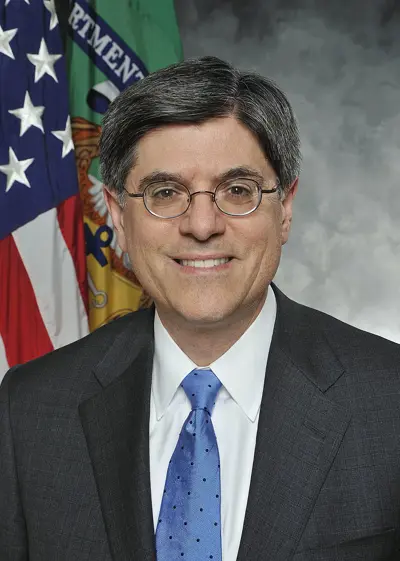
Jacob Joseph "Jack" Lew is an American attorney and politician who served as the 76th United States Secretary of the Treasury from 2013 to 2017. A member of the Democratic Party, he also served as the 25th White House Chief of Staff from 2012 to 2013 and Director of the Office of Management and Budget in both the Clinton Administration and Obama Administration.
