Percy Bysshe Shelley Quotes
In proportion to the love existing among men, so will be the community of property and power. Among true and real friends, all is common; and, were ignorance and envy and superstition banished from the world, all mankind would be friends. The only perfect and genuine republic is that which comprehends every living being. Those distinctions which have been artificially set up, of nations, societies, families, and religions, are only general names, expressing the abhorrence and contempt with which men blindly consider their fellowmen.
Shelley, Percy Bysshe. "Essay on Christianity." The Prose Works of Percy Bysshe Shelley, edited by Harry Buxton Forman, vol. 2, Reeves and Turner, 1880, p. 364.


His agents were responsible for over 200,000 executions of Russian citizens during the 1917-1922 civil war period. Secret Police precursor to the KGB


Alexander had an unusual absence of nationalism or even pride of his Macedonian customs and culture. His adolescent teacher was Aristotle whose broad education made Alexander a great conqueror and ruler of different races, cultures and religions. He turned the world, literally and figuratively, into his country and in order to rule over such a vast area, he had to depend on people of different races, religions, customs, and cultures. The diversity and multiculturalism of his empire with the paucity of racism and discrimination by the conquerors has never been reached again.


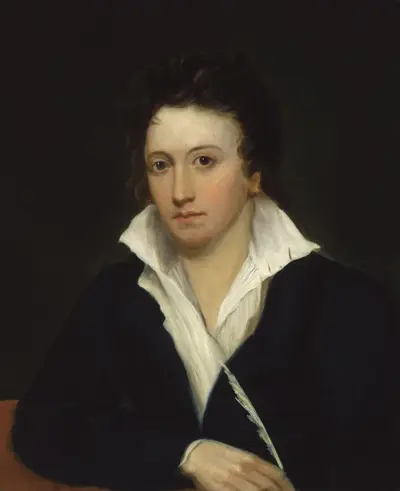
Percy Bysshe Shelley was one of the major English Romantic poets. American literary critic Harold Bloom describes him as "a superb craftsman, a lyric poet without rival, and surely one of the most advanced sceptical intellects ever to write a poem." A radical in his poetry as well as in his political and social views, Shelley did not achieve fame during his lifetime, but recognition of his achievements in poetry grew steadily following his death and he became an important influence on subsequent generations of poets including Browning, Swinburne, Hardy and Yeats.
