Tristan Tzara Quotes
In principle, I am against principles.
Tzara, Tristan. Seven Dada Manifestoes and Lampisteries. Translated by Barbara Wright, John Calder, 1977, p. 3.


Without Dirksen’s support, LBJ could not have passed the Civil Rights Act of 1964, ending legal segregation. However, the conservative wing of the Republican Party had strongly opposed the idea of the Federal Government using its power to control and regulate issues that involved local practice and custom and trampled on states’ rights. Dirksen, who personally was not a racist like many conservatives were at the time, faced the dilemma and came down on the side of ending legal discrimination even if it meant violating the principle of limited federal government. When asked about his seeming inconsistency (which was often), this was his brilliant response. Producing one of the best political quotations of all time.


The quotation is text uttered by one of her characters.

Samuel Langhorne Clemens, 1835-1910


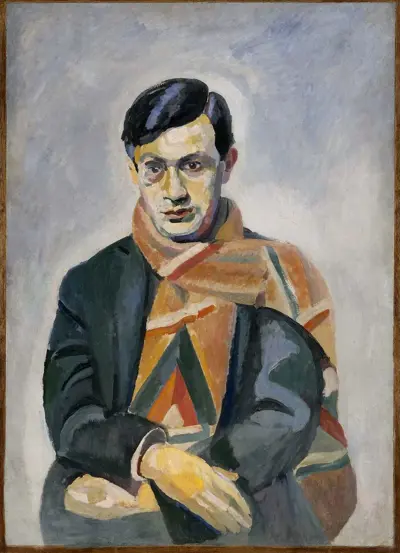
Tristan Tzara was a Romanian and French avant-garde poet, essayist and performance artist. Also active as a journalist, playwright, literary and art critic, composer and film director, he was known best for being one of the founders and central figures of the anti-establishment Dada movement. Under the influence of Adrian Maniu, the adolescent Tzara became interested in Symbolism and co-founded the magazine Simbolul with Ion Vinea (with whom he also wrote experimental poetry) and painter Marcel Janco. During World War I, after briefly collaborating on Vinea's Chemarea, he joined Janco in Switzerland. There, Tzara's shows at the Cabaret Voltaire and Zunfthaus zur Waag, as well as his poetry and art manifestos, became a main feature of early Dadaism. His work represented Dada's nihilistic side, in contrast with the more moderate approach favored by Hugo Ball.
