William of Tyre Quotes
In order to proceed to an election which was pleasing to God and which took account of individual merits, the princes called in some of the household of each of the great leaders [candidates], made them take a solemn oath, and questioned them about the conduct and habits of their lords … This was done so that the electors might thus be more fully and more faithfully informed of the merits of the candidates. Those who were later very closely questioned under the required oath by the electors were forced to confess in secret the vices of their lords and likewise to enumerate their virtues, so that it might be made plain just what sort of men their lords were.
He was elected but then never served. The process went on and the first of a line of Western Christian Kings of Jerusalem began. Comparison with modern elections and appointments shows the process not too dissimilar. The FBI investigates prospective Presidential appointments and interviews close associates who can be prosecuted for lying to the FBI, or executive sessions of Senate Committees determining fitness of nominees.
William of Tyre, ~1130-~1185, Historian & Archbishop of Tyre, Description of the Election of Raymond, Count of Toulouse as Latin King of Jerusalem--then controlled by the Christians
Sourced by: Eigen's Political and Historical Quotations

Achtenberg who was later confirmed as Assistant Secretary of HUD was an open lesbian.


The “wrong” people to Helms. Were Americans who disagreed with his methods and politics—especially members of Congress who wanted to make the CIA more accountable for its actions. If nothing is ever written down and everything is secret, there is no practical way of holding the agency accountable in a democracy. Helms was later convicted to perjury for lying to Congress.

The Miami Herald did just that, and presidential candidate Hart was discovered entertaining a young woman from Miami in his Washington DC townhouse during a weekend when his wife was in Denver. Hart quit the campaign soon after.


This quotation illustrates another political advancement instituted by Queen Victoria. In this case it was Merit Appointments which were almost unheard of. The Foreign Secretary, Lord Palmerston, was notorious for his crony appointments and the use of appointments to gain political support for himself. (He was good at it and became prime minister 4 years later.0 However, under the Queen’s constant insistence and pressure, merit began to be the major factor in selection and appointments. Ironically, even in the United States, diplomats though often very qualified, are one of the last vestiges of patronage appointments with many ambassadorships going to campaign contributors.

While it is true that almost all nations have intelligence agencies and collect intelligence about both friends and foes, our allies did not bug the personal phones of leaders of friendly countries and were very distressed when they discovered that the US NSA had access to the personal calls of world leaders including the leaders of Brazil, Germany and France. Rubio and others believed that they only reason our allies had not done so is that they did not have the technical capability to do so; otherwise they would have been bugging our Presidential and cabinet level phones. President Obama ordered the practice stopped with respect to our allies.

This is a major issue for the nation. How can the president be responsible if he is not informed? However, some argue that the President must have “plausibility deniability” so he can deceive foreign leaders without lying to them. The laws require that nothing may be withheld from the President but there are some in the agency including past directors who believe that they sometimes should lie to the President or withhold information when it is in the national interest—which of course only they judge without any checks and balances.


He was referring to the testimony given before the Senate of James R. Clapper, U. S. Director of National Intelligence. He denied that the NSA was collecting data on millions of American communications. Then Edward Snowden revealed that the NSA was capturing data on ALL U. S. phone calls and e-mails. See {634917} for details on the false testimony.

Edward Snowden, a defense contractor and government employee, publicly revealed that the U. S. intelligence agencies were intercepting and keeping a data base of ALL telephone calls and all Internet e-mails. The government had denied that this was so, and had classified the domestic spying program as Top Secret. Snowden had signed an agreement not to reveal any classified information, and he violated the agreement. Therefore the government was trying to extradite Snowden from Russia at the time so that they could criminally prosecute him. However, there was great debate as to whether the spying on all Americans was legal and Constitutional. Many saw Snowden as a “whistleblower” and pointed out that the government which had lied wanted to prosecute Snowden for telling the truth. Fein, an attorney, was representing Snowden and his family.

He had developed a mathematical algorithm for a computer encryption that would take years to break even for the most powerful supercomputers. The U. S. Government tried to prevent him from publishing the technique and formula, but he went ahead anyway. They then tried to accuse him of violating an Arms Export Control Act for allowing people in other countries to see it, but there were no legal grounds for indictment. The strong encryption method, PGP, can be used with almost any PC and internet transmission of files.

While this sounds good, in Taiwan it is not clear that the Premier has any authority over the intelligence agencies that is meaningful. Even in the United States Major intelligence leaders have lied to Presidents and the Congress about their clearly illegal activities, and many sceptics suggest that the Premier would have no way of knowing what his intelligence agencies are actually doing.


Even in 1871 the world and human knowledge was changing so fast, that he could utter the second sentence. He argued for merit exams for all government positions.

Oswald was the assassin of President John F. Kennedy.

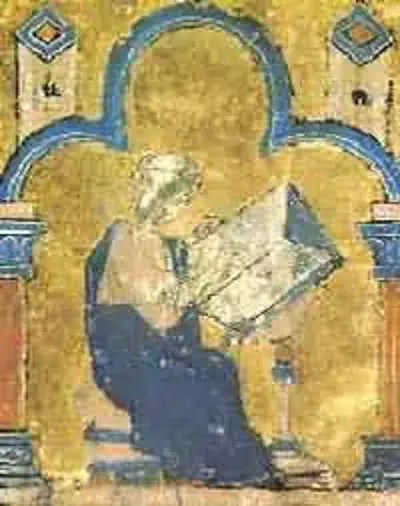
William of Tyre was a medieval prelate and chronicler. As archbishop of Tyre, he is sometimes known as William II to distinguish him from his predecessor, William I, the Englishman, a former Prior of the Church of the Holy Sepulchre, who was Archbishop of Tyre from 1127 to 1135. He grew up in Jerusalem at the height of the Kingdom of Jerusalem, which had been established in 1099 after the First Crusade, and he spent twenty years studying the liberal arts and canon law in the universities of Europe.
