Thomas Babington Macaulay Quotes
In order that he might rob a neighbour whom he had promised to defend, black men fought on the coast of Coromandel and red men scalped each other by the great lakes of North America.
Macaulay, Thomas Babington. "Frederic the Great." The Edinburgh Review, vol. 75, no. 151, Apr. 1842, p. 231.


The culture of Iraq and the Desert tribes made raiding and looting of other villages or travelers or caravans a way of life. The British occupiers were determined to put an end to it and Harris, a young officer, developed the retaliation of bombing the village of the raiders and their warlords. This appears to be the beginning of destroying of houses in the Middle East as a method of retaliation and punishment which would be adopted so well by the Israelis as a humane method and they often quoted Harris saying: “we put them to the maximum amount of inconvenience, without physical hurt, and they soon stopped their raiding and looting.”

See {613496} for the origin of the “thrashing a cannibal” phrase.
At the time there were relatively few natives left. The remainder were hunted and exterminated. Only 75 were left at the end of the “Black War” where there had been about 5,000 at the beginning. See {618042}.

The Mormons, not unlike other whites at the time, in effect invaded the Indians’ land, and took possession. At first the Mormons tried to convert the Indians and when the Indians preferred their own religion, there was constant occupation of Indian land in the Salt Lake Valley.

“Cleaned out” meant destroyed. He had been a strong advocate of peace with whites. See {610679} .


The General had sent his troops to invade and take over the British Falkland Islands. Others were worried that the British might send military to reverse the invasion. He really did not think that the British would send a military expedition halfway around the world for a few meager islands and a few hundred British citizens. He had fired up the population over the islands which they wanted so much that he actually believed that if the English came in force, they would be far away from their supply lines and their airfields, and Argentinians had always had an exalted opinion of their prowess. See {623878}. The English did come and the war was a rout with Argentina taking huge casualties and a great deflation of their ego. Galtieri was soon ousted.


During her adult life, she was the de facto ruler of China. Officials then did little or nothing to curb the attacks on the various foreigners and foreign power that occupied and exercised some control over parts of China. The Government itself could do little as it was too weak militarily with many key officials bribed by the foreign powers. The Boxers were a grass roots xenophobic movement devoted to getting the foreign powers out of China by violence.


This quotation is important for two reasons. First, it shows that there was a very hostile environment in Europe well before the assassination of the Archduke of Austria that “triggered” WWI. Second, that the Germans were racist before Hitler ever came on the scene. The Emperor demagogued the issue and took it to new extremes, but the evil was there. To the Germans, the Slavs and Russians were a lesser form of humanity than the Germans. The Austrians were threatening to attack Serbia and Russia. The Austro-Hungarian Empire, ruled many ethnic Slavs, Russians and Muslims—the lower forms of humanity—and long before Hitler, Wilhelm and other leading Germans thought that the Germanic Peoples should rule that part of the world as the lesser “races” were not fit to rule.
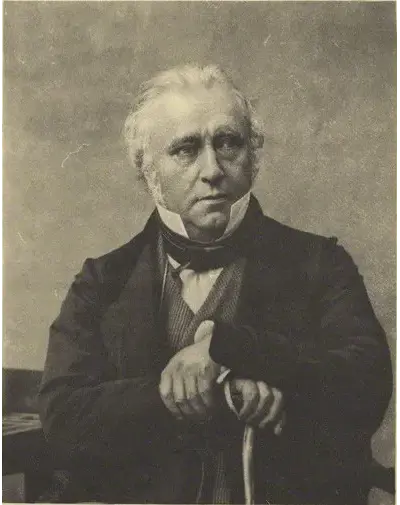
Thomas Babington Macaulay, 1st Baron Macaulay, FRS FRSE PC was a British historian and Whig politician. He wrote extensively as an essayist, on contemporary and historical sociopolitical subjects, and as a reviewer. His The History of England was a seminal and paradigmatic example of Whig historiography, and its literary style has remained an object of praise since its publication, including subsequent to the widespread condemnation of its historical contentions which became popular in the 20th century.
