Jose Marti Quotes
In nations composed of both cultured and uncultured elements, the uncultured will govern because it is their habit to attack and resolve doubts with their fists in cases where the cultured have failed in the art of governing. The uncultured masses are lazy and timid in the realm of intelligence, and they want to be governed well. But if the government hurts them, they shake it off and govern themselves.
Jose Marti, 1853-1895, Cuban Revolutionary Leader, “Nuestra América" (1881), La Revista Ilustrada de Nueva York, January 1, 1891
Sourced by: Eigen's Political and Historical Quotations


The violent IRA logic had always been a little tortured. At the time, the claim was that the British were not wanted in Ireland but were there only by force of arms. However, the British administration of Ireland at the time was not forceful or violent at all. Few others had the freedom and democracy of Ireland as a part of Great Britain. De Valera’s logic was that if the British in Ireland were subjected to violent, terrorist attacks, they would respond with force of arms, and thus show that they held Ireland by force. Most of the Catholics of Ireland preferred independence while most of the Protestants preferred the relationship with England.


The slogan was made famous by James Larkin, 1875–1947, Irish trade union leader who used it frequently and whose memorial statue in Dublin contains the quotation in French, English and Irish.


Salisbury was a brilliant, effective prime minister, but he was a snob and not a democrat. See {639131}.


Describing the annual conference in Davos, Switzerland where the very wealthy of the world gather and discuss mutual concerns.


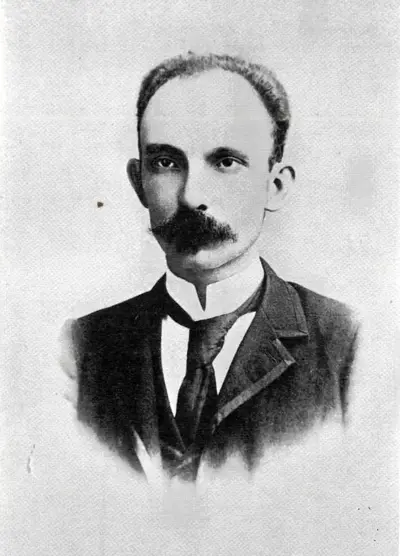
José Julián Martí Pérez was a Cuban poet, philosopher, essayist, journalist, translator, professor, and publisher, who is considered a Cuban national hero because of his role in the liberation of his country. He was also an important figure in Latin American literature. He was very politically active and is considered an important revolutionary philosopher and political theorist. Through his writings and political activity, he became a symbol of Cuba's bid for independence from the Spanish Empire in the 19th century, and is referred to as the "Apostle of Cuban Independence". From adolescence, he dedicated his life to the promotion of liberty, political independence for Cuba, and intellectual independence for all Spanish Americans; his death was used as a cry for Cuban independence from Spain by both the Cuban revolutionaries and those Cubans previously reluctant to start a revolt.
