John le Carre Quotes
In my day, MI6 - which I called the Circus in the books - stank of wartime nostalgia. People were defined by secret cachet: one man did something absolutely extraordinary in Norway; another was the darling of the French Resistance. We didn't even show passes to go in and out of the building.


Precursor to CIA. During WWII Donovan’s OSS, the FBI and the State Department had the three civilian intelligence organizations while each of the 4 Armed Services had their own intelligence services. Rarely did any of these 7 organizations communicate with any of the others. In the case of the OSS, the FBI and the military services tended to try and obstruct many of their operations. This was the first call for what became the CIA.

The American Embassy in Berlin had wiretapped the telephone and telegraph wires of the German Foreign Ministry. The man who did that was hired by Secretary of State Lansing as the first employee of the new unit.

Intelligence agents tend to prefer covert activities to the less dramatic, non-exciting, activity of gathering and analyzing intelligence. Most national intelligence services tend to enlarge their portfolio to include covert activities regardless of what the national leaders intended. Because of the secrecy, they can often get away with this.


In her younger days Steinham worked with the CIA. Originally the Office of Strategic Service, the precursor to the CIA, was an amalgam of some of the nation’s most educated and dedicated people who tended to be very idealistic in saving the world from fascists like Nazi Germany and Japan. The were extremely nonpolitical and were not involved in the liberal conservative battles that the agency got itself into as the Red Scare and the fear of Communism affected much of the society including the CIA.
The first two would often interfere with the operations.

Mykola Lebed was of inestimable value to this agency…. He assisted in operations of great importance
This is a noteworthy quotation as it shows the nasty side of American intelligence activity in the aftermath of WWII. Mykola Lebed, 1909-1998 was a Ukrainian Nationalist war criminal working with the Nazis who was responsible for the murder and ethnic cleansing of Poles in Volhynia and Eastern Galicia, He was convicted, and imprisoned for the murder, in 1936, of Polish Interior Minister Bronislaw Pieracki but was released when the Nazis occupied Poland. However, he was anti-Russian and our CIA enlisd his “services” to spy on the Soviets in the Ukraine. Then in 1949 he emigrated to the United States. As a war criminal, the law required that he be sent back to Europe, but this letter from the CIA Director “persuaded” the immigration authorities to not only allow him into the country, but the CIA paid him and he lived until in New York City until his death. There was no legal basis for his entry into the United States but the arrangements were made in secret. Polish patriots who had greatly assisted the Allies in fighting the Germans in WWII with great losses, did not even know that the war criminal that had tortured and murdered so many Poles was not only alive and well and living in New York, but was being paid by the United States government. The issue of what criteria are used for American intelligence agencies to use agents and what “rewards” can be given has been in controversy ever since. In one case in the late 20th century, the CIA actually employed an agent in South America who murdered and raped American nuns doing humanitarian work. The argument on the other side is that for espionage one wants terrible people with no moral compunctions as they make good agents. The question has always been at what moral cost and does a sociopath really make a good agent. See {633239}.

This quotation illustrates a classic problem with the Central Intelligence Agency. Other agencies, like the State Department’s budgets are open and journalists publicize large houses and other high expenditures. The Central Intelligence Agency, in contrast, operates in secret, and there is not the same outside pressure for prudence. In addition to a lack of prudence with CIA expenditure as a result of no public oversight, the other agencies are jealous of the CIA staff and there “perks”.


Casey continuously violated the law and lied to the President and Congress.
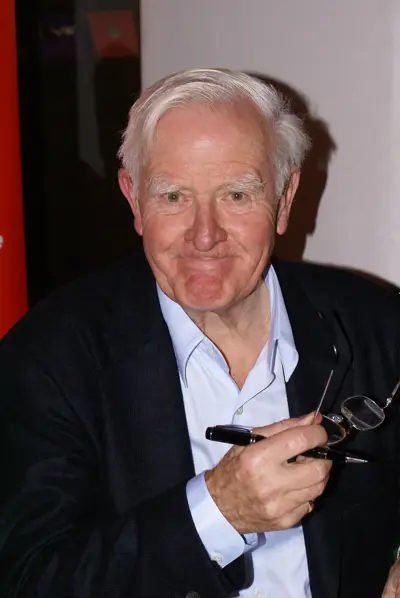
David John Moore Cornwell, better known by his pen name John le Carré (/ləˈkæreɪ/), was an English author with Irish citizenship, best known for his espionage novels. During the 1950s and 1960s, he worked for both the Security Service (MI5) and the Secret Intelligence Service (MI6). His third novel, The Spy Who Came In from the Cold (1963), became an international best-seller and remains one of his best-known works.
