Richard V. Allen Quotes
In general, any incoming administration must carefully examine ('vet') its nominees for high public office.
Allen, Richard V. "The Presidential Transition." U.S. Department of State, Bureau of International Information Programs, Nov. 2000.


President Andrew Johnson was one of the worst Presidents America has elected. He was a tailor and became governor of Tennessee before he ascended to the Presidency on the assassination of Abraham Lincoln.


Note that early constitutional experts assumed that one of the President’s roles was to be non partisan and control partisanship. Note the phrase ‘prevent the artifices of party’. The early founders were very wary of political parties of ‘factions’ as Madison called them. However, most were extremely partisan although in the Presidency partisanship was toned down by George Washington but after him, partisan ship became the norm.


Before Theodore Roosevelt, American Presidential Candidates had to pretend that they did not seek the presidency and remain passive. However Roosevelt changed that norm and the primary elections, taking the nomination away from a few party leaders, further required Presidential aspirants to campaign. The principle Lomdes articulated was that if called upon, one was obligated to serve, but should not overtly seek the position and wait to be called by the people.

The Republican controlled Senate whose Judiciary Committee and voted overwhelmingly for the President’s nominee for Attorney General, Loretta Lynch, but the Senate Republicans refused to the nomination up for a vote unless the Democrats and the President would agree to add an abortion ban on money that was to be appropriated for assistance to trafficked and sexually exploited women and girls. Never before had a nomination like this have been subject to this type of blackmail over terms of legislation on a matter that had nothing to do with the nominee or the cabinet position. However, this was the time one of the extreme periods of hyper partisanship in American History.


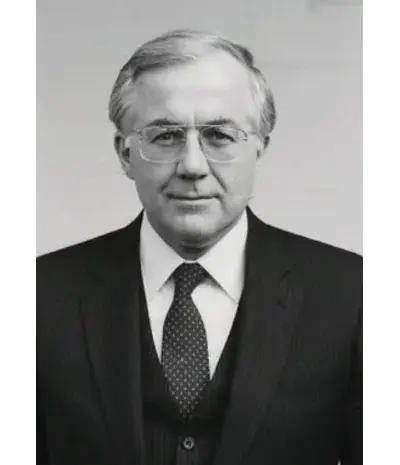
Richard Vincent Allen was the United States National Security Advisor to President Ronald Reagan from 1981 to 1982, having been Reagan's chief foreign policy advisor from 1977. He has been a fellow of the Hoover Institution since 1983. He is a past member of the Defense Policy Board Advisory Committee.
