Cesare Beccaria Quotes
In every human society, there is an effort continually tending to confer on one part the height of power and happiness, and to reduce the other to the extreme of weakness and misery. The intent of good laws is to oppose this effort and to diffuse their influence universally and equally.
Beccaria, Cesare. An Essay on Crimes and Punishments. Philip H. Nicklin, 1819, p. 15.


Rodriquez was an indigenous Indian who came to power with the startling victory of Evo Morales, also an Indian in a country where the Indians comprise the majority of the population but have had virtually no political power and been discriminated against by Bolivian governments since the country became independent of Spain. Many whites feared the new elective revolution fearing that the Indian’s in government would turn the tables and do exactly what they had done in distributing the nation’s limited wealth—namely direct it primarily to the whites and elites to the relative exclusion of the Indians. Rodriguez claimed that the intention of their administration was otherwise.

Jacques Anatole Francois Thibault


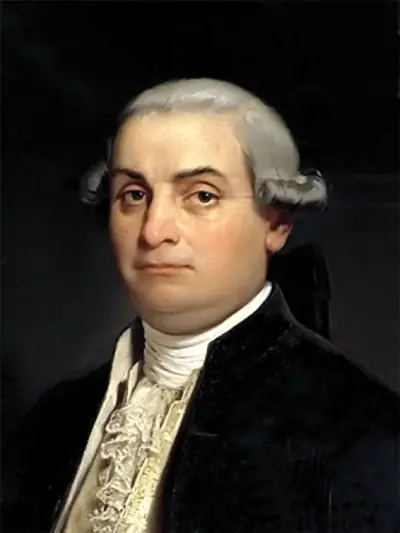
Cesare Bonesana di Beccaria, Marquis of Gualdrasco and Villareggio was an Italian criminologist, jurist, philosopher, and politician, who is widely considered one of the greatest thinkers of the Age of Enlightenment. He is well remembered for his treatise On Crimes and Punishments (1764), which condemned torture and the death penalty, and was a founding work in the field of penology and the Classical School of criminology. Beccaria is considered the father of modern criminal law and the father of criminal justice.
