Aristotle Quotes
Although it may be difficult in theory to know what is just and equal, the practical difficulty of inducing those to forbear who can, if they like, encroach, is far greater, for the weaker are always asking for equality and justice, but the stronger care for none of these things.
Aristotle. Politics. Translated by Benjamin Jowett, Clarendon Press, 1885, p. 192.


Rodriquez was an indigenous Indian who came to power with the startling victory of Evo Morales, also an Indian in a country where the Indians comprise the majority of the population but have had virtually no political power and been discriminated against by Bolivian governments since the country became independent of Spain. Many whites feared the new elective revolution fearing that the Indian’s in government would turn the tables and do exactly what they had done in distributing the nation’s limited wealth—namely direct it primarily to the whites and elites to the relative exclusion of the Indians. Rodriguez claimed that the intention of their administration was otherwise.

Jacques Anatole Francois Thibault


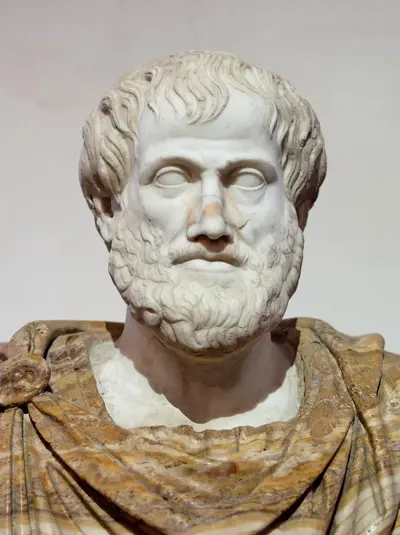
Aristotle (/ærɪˈstɒtəl/; Greek: Ἀριστοτέλης Aristotélēs, pronounced [aristotélɛːs]; 384–322 BC) was a Greek philosopher and polymath during the Classical period in Ancient Greece. Taught by Plato, he was the founder of the Lyceum, the Peripatetic school of philosophy, and the Aristotelian tradition. His writings cover many subjects including physics, biology, zoology, metaphysics, logic, ethics, aesthetics, poetry, theatre, music, rhetoric, psychology, linguistics, economics, politics, meteorology, geology and government. Aristotle provided a complex synthesis of the various philosophies existing prior to him. It was above all from his teachings that the West inherited its intellectual lexicon, as well as problems and methods of inquiry. As a result, his philosophy has exerted a unique influence on almost every form of knowledge in the West and it continues to be a subject of contemporary philosophical discussion.
