Edward Everett Quotes
In conformity with these designs on the city of Washington, and notwithstanding the disastrous results of the invasion of 1862, it was determined by the Rebel government last summer to resume the offensive in that direction.
Everett, Edward. An Oration Delivered on the Battlefield of Gettysburg, November 19, 1863. Baker & Godwin, 1863, p. 9.


The Virginia Campaign of May 1864 was clearly the beginning of the end of the war. This was clear at the time, not only to the military leaders of both sides, but also to the media and thence the general public in the North. At the beginning of the war the Army of the Potomac, the largest Union Army was commanded by McClellan whose concerns were with his own political career and not winning the war. He had an aversion to heavy fighting and did not see the war strategically as Lincoln, Grant and Sherman did: To cripple the capacity of the South to wage war. So the early history of the Army of the Potomac was a series of undecisive battles which were either standoffs or the Confederates won despite the much larger and better armed and equipped Union army. As soon as McClellan was replaced, things began to turn around and when Grant was selected for Command of all Union Troops, the Army of the Potomac performed much better, including taking Richmond, the Confederate Capital.


That is the way he was killed. The phrase, “We are bound to believe that, anyhow” indicates that Stuart really realized how futile the Southern war effort would be but loyalty and patriotism required him to suspend his rational belief structure.


This cry echoed throughout the North where the public wanted a full invasion of the capital of the Confederacy to put an end to the rebellion. However is was not clear what effect that would have on the Border States—Maryland and Kentuucky—and many politicians thought that the South would “come to its senses” once they realized what they had done. But the South would not change its course, and the Union Generals in Command were very reluctant to actually invade the South. It was only after the South attacked in the North that the Union Military began to realize that this was a Civil War that would not be resolved politically.


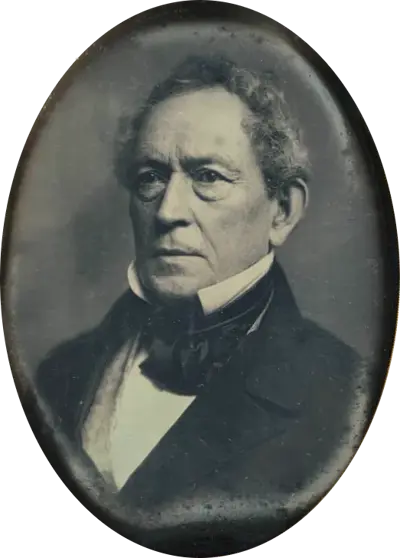
Edward Everett was an American politician, pastor, educator, diplomat, and orator from Massachusetts. Everett, as a Whig, served as U.S. Representative, U.S. Senator, the 15th Governor of Massachusetts, Minister to Great Britain, and United States Secretary of State. He also taught at Harvard University and served as its president.
