Sarah Moore Grimke Quotes
In all ages, through all the varied experience of individuals and nations, knowledge has been the power which has civilized, elevated and dignified humanity. In those countries where progress has been most rapid, the thirst for knowledge has been most intense.
Grimké, Sarah Moore. "Education of Women." The Feminist Thought of Sarah Grimké, edited by Gerda Lerner, Oxford University Press, 1998, p. 111.


This was a radical speech for the time, suggesting reforms that had been unthinkable to most Turks. Although it is not prohibited by the Koran and early Islamic artists made some of the greatest paintings and depictions of people, fundamentalists gained control of Islam and interpreted any statue as an idol that could be worshipped and this generalized to Islamic art in general where people ceased to be depicted and even animal depictions were rare. Muslim art developed incredible geometric intricacy but tended not to depict anything that is real. This extended to photography and illustrations in books including textbooks. At the same time, not unlike some Christian and Jewish Fundamentalists, the Muslim fundamentalists opposed science and the teaching thereof on the grounds that all authentic knowledge was in the Koran and anything else was not only false but also heretical. So this speech was a type of “declaration of war” against the established religious order and culture.


By symbols be was not only referring to metaphorical symbols of letters, words, digrams, numbers and formulas. The vast majority of all human knowledge is spread by symbols of one kind or another. The must sophisticated devices or weapons all boil down to sets of words, formulas and diagrams. Art is almost all symbolic.


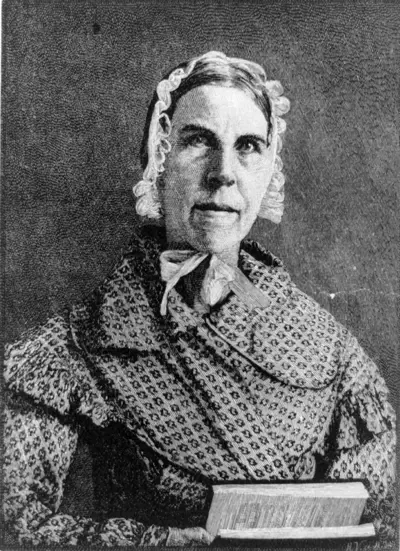
Sarah Moore Grimké was an American abolitionist, widely held to be the mother of the women's suffrage movement.:xxi Born and reared in South Carolina to a prominent, wealthy planter family, she moved to Philadelphia, Pennsylvania, in the 1820s and became a Quaker, as did her younger sister Angelina. The sisters began to speak on the abolitionist lecture circuit, joining a tradition of women who had been speaking in public on political issues since colonial days, including Susanna Wright, Hannah Griffitts, Susan B. Anthony, Elizabeth Cady Stanton, and Anna Dickinson. They recounted their knowledge of slavery firsthand, urged abolition, and also became activists for women's rights.
