Napoleon Bonaparte Quotes
In a great nation, the majority are incapable of judging wisely of things.
Bonaparte, Napoleon. Political Aphorisms, Moral and Philosophical Thoughts of the Emperor Napoleon. Edited by G. de Liancourt, T.C. Newby, 1848, p. 30.


“The Wisdom of Crowds” is a digital information theory‘ that a very large number of people might make a better quality decision that a few experts in an area. Bruni was a critic of this notion.

This quotation is historically important because Davis clearly states the reason for the rebellion of the South. The anti-slave states were growing at a greater rate than the slave states and despite the greater voting power that a southerner had (a result of the 3/5 count of slaves for census purposes, and the Senate), the handwriting was on the wall and the majority of the United States was against the vicious institution of slavery and would make it unprofitable, impossible and/or illegal in the coming years. Southern slavery advocates saw this as a “tyranny of the majority” and therefore took up arms. In the early 20th century, apologists for the Southern rebellion tried to promote the idea that there were reasons other than slavery, but this quotation and the resolutions of the states who withdrew from the Union make it clear that the right to maintain slavery was the only significant issue. In that sense it was a States’ Rights issue, but the South was opposed to States’ Rights when it came to States refusing to return fugitive slaves when Federal Law required such under the Dred Scott Supreme Court Decision.

Madison wrote this essay for publication in New York. That state, one of the largest and most important of the 13 colonies, was polarized about the proposed Constitution and Madison, Hamilton and John Jay produced this great set of essays to convince Americans to vote for ratification. Madison acknowledged that many people had complained about various aspects of the proposed constitution and in this essay he deals with the complaints about political parties—“factions”.


An excellent example of this occurred in the first decades of the 21st century. At the beginning if the century, the majority of Americans were clearly opposed to the idea of same-sex / gay marriage. By 2008, the population was evenly split, for and against. By 2014 the majority of Americans were clearly in favor of same-sex marriage and it had been legalized in more than a dozen states.


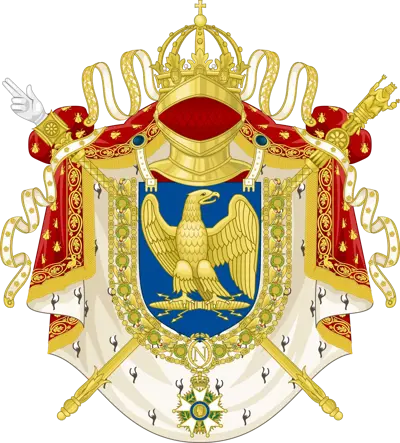
Napoléon Bonaparte was a French military and political leader of Corsican descent. He rose to prominence during the French Revolution and led several successful campaigns during the Revolutionary Wars. As Napoleon I, he was Emperor of the French from 1804 until 1814, and again in 1815. Napoleon dominated European and global affairs for more than a decade while leading France against a series of coalitions in the Napoleonic Wars. He won most of these wars and the vast majority of his battles, building a large empire that ruled over continental Europe before its final collapse in 1815. One of the greatest commanders in history, his wars and campaigns are studied at military schools worldwide. He remains one of the most celebrated and controversial political figures in human history.
