Philip Morin Freneau Quotes
In a country which two hundred years ago was peopled only by savages and whose government has ... been no other than republican, it is really wonderful that there should be any polite authors at all in any line ...
Philip Morin Freneau, 1752-1832, Poet, Writer and State Department Official, 1788
Sourced by: Eigen's Political and Historical Quotations


Early in his career, Santa Anna was an enthusiast for democracy. However, the republican form of government did not work at the time in Mexico and he developed into a despot and dictator.


Ingersoll was considered to be the greatest orator and political thinker of his day, but his overt atheistic views curtailed his elected political career.


This quotation is an excellent example of the attitude of many upper class Englishmen towards the United States in the early part of the 19th century. With the notable exception of Ben Franklin, American Science was undeveloped, and the arts were equally unrefined. However, in assessing the United States, nothing was more derogatory than American Slavery which was totally primitive and barbaric by sophisticated European standards. What is amazing about this quotation was its truth and accuracy which shows us the amazing American development that the United States underwent in the next hundred years when it would be equal to any nation on earth. The American freedom, the abolition of slavery and the brilliance of welcoming immigrants from the world to help develop the free nation produced the greatest country on Earth.


What the Supreme Leader did not understand was that the very books that he recommended to see the faults of America were the very instruments that influenced the American reformers to change and improve America. And the lesson he missed is that he would not allow authors to heavily criticize the current Iran and have a wide audience so that Iran could improve. His examples were very well chosen. The lesson is the wrong one however.
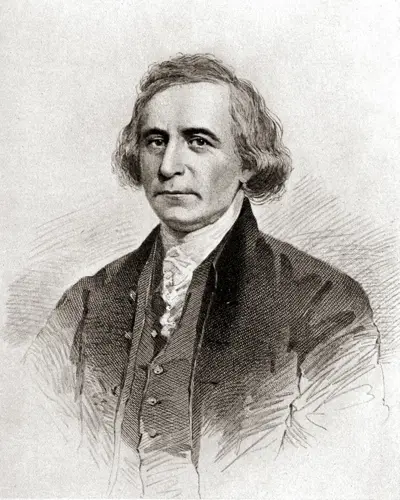
Philip Morin Freneau was an American poet, nationalist, polemicist, sea captain and newspaper editor sometimes called the "Poet of the American Revolution". Through his newspaper, the National Gazette, he was a strong critic of George Washington and a proponent of Jeffersonian policies.
