Robert M. Gates Quotes
In a Congressional Hearing, when the red light of the television camera came on it had the effect of a full moon on weir wolves.
When members of Congress were in front of a live camera, they began to posture, give monologues, harangue, and berate witnesses in ways that were very different when a hearing was ongoing. The television coverage provides an opportunity for publicity and campaigning that few members of Congress can resist.
Robert M. Gates, U. S. Secretary of Defense (Republican), Director of the CIA, Interview, C-SPAN Radio, October 2014
Sourced by: Eigen's Political and Historical Quotations


Americans had never had the opportunity to see this committee in action before. While many Americans were intimidated, many were also very distressed to see how a Congressional Committee was abusing its power. And although the frightened Hollywood and network executive executives were intimidated into blacklisting Lawson and others, more and more Americans were lining up against this committee and Senator McCarthy’s committee in the Senate. This culminated in the Senate sanction of McCarthy and the discrediting of HUAC which never again had the influence that they had before this hearing.

Vidal was perhaps the first Politician to realize the importance that television would have on politics and celebrity.


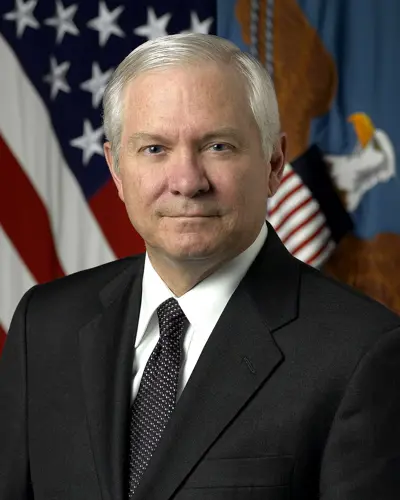
Robert Michael Gates is an American intelligence analyst, and university president who served as the 22nd United States secretary of defense from 2006 to 2011. He was originally appointed by President George W. Bush and was retained for service by President Barack Obama. Gates began his career serving as an officer in the United States Air Force but was quickly recruited by the Central Intelligence Agency (CIA). Gates served for 26 years in the CIA and the National Security Council, and was Director of Central Intelligence under President George H. W. Bush. After leaving the CIA, Gates became president of Texas A&M University and was a member of several corporate boards. Gates served as a member of the Iraq Study Group, the bipartisan commission co-chaired by James A. Baker III and Lee H. Hamilton, that studied the lessons of the Iraq War.
