Stefan Zweig Quotes
In 1938, after Austria, our universe had become accustomed to inhumanity, to lawlessness, and brutality as never in centuries before. In a former day the occurrences in unhappy Vienna alone would have been sufficient to cause international proscription, but in 1938 the world conscience was silent or merely muttered surlily before it forgot and forgave.
Zweig, Stefan. The World of Yesterday: An Autobiography. Translated by Eden and Cedar Paul, Viking Press, 1943, p. 405.


First Published American Indian Author. His last public speech. He was referring to a horrible massacre of Christian Indians and the polarizing effect that such conflicts had. Whosoever publicly castigated a massacre of whites or Indians would be met by accusations of condoning the massacres of the other side and ignoring the inevitable and natural seeking of retaliation for future protection and revenge.

See Ferdinand I for the Bulgarian denial {601322}.

She and most other German scientist fled from the Nazis—she to Sweden. Hahn, her former collaborator, remained in Germany and worked for the Nazis. The letter was written in the expectation that Moe Berg, an American OSS agent would have it delivered to Hahn in Germany. So far as anyone can tell, it was never delivered but was used by the OSS for analysis of German physics prowess.
This was part of the continual conflict between the Muslims and the Eastern Orthodox Christians. The Greeks ended up doubling their territory.
This argument—that Christians were more cruel and uncivilized than heathens in some respects was very persuasive to many serious white Christians who began to see slavery and the slave trade in a new light.


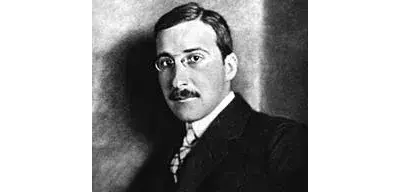
Stefan Zweig was an Austrian novelist, playwright, journalist and biographer. At the height of his literary career, in the 1920s and 1930s, he was one of the most widely translated and most popular writers in the world.
