Felix Frankfurter Quotes
In 1921 the temper of the times made it the special duty of a prosecutor and a court engaged in trying two Italian radicals before a jury of native New Englanders to keep the instruments of justice free from the infection of passion or prejudice. In the case of Sacco and Vanzetti no such restraints were respected. By systematic exploitation of the defendants' alien blood, their imperfect knowledge of English, their unpopular social views, and their opposition to the war, the District Attorney invoked against them a riot of political passion and patriotic sentiment; and the trial judge connived at -- one had almost written, cooperated in -- the process.... Judge Thayer's opinion stands unmatched for discrepancies between what the record discloses and what the opinion conveys. His 25,000-word document cannot accurately be described otherwise than as a farrago of misquotations, misrepresentations, suppressions, and mutilations. The disinterested inquirer could not possibly derive from it a true knowledge of the new evidence that was submitted to him as the basis for a new trial. The opinion is literally honeycombed with demonstrable errors, and a spirit alien to judicial utterance permeates the whole.
The two defendants were executed. The trial was not only defective as this quotation alleges, but other subsequent investigations showed that there was exculpatory evidence that was withheld by the authorities. This case was one of the lowest points in American jurisprudence. Frankfurter was at the time of this writing a law professor and was appointed. 12 years after this writing, he was appointed to the Supreme Court and served there with distinction for 23 years.
Felix Frankfurter, 1882-1965, U. S. Supreme Court Justice, "The Case of Sacco and Vanzetti", The Atlantic Monthly, March 1927
Sourced by: Eigen's Political and Historical Quotations

This is the classic argument given by those who would deny a defendant the Constitutional protection against self-incrimination. The belief that an innocent man has nothing to fear from the police is refuted by the many cases of innocent men being convicted by evidence they have given in the belief that they were innocent, and served long jail sentences only to later be proved by DNA evidence that they could not possibly have been guilty. Since Nott’s day, society has not only found many cases where honest error was made by the police or prosecutors, but many where there was venal prosecutorial misconduct and defendants were jailed even though the authorities were aware of evidence of innocence and kept it secret. There have been a number of these cases where a defendant was on death row and about to be executed when it was found he was innocent. Probably there have been men wrongly executed. See {629444} for a probable example.
This interesting historical quotation illustrates the fact that in almost every American generation there are those who believe that society has gone too far in protecting the rights of criminal suspects at the expense of law and order in the general society. This is nothing new. This is a classic argument given by those who would deny a defendant the Constitutional protection against self-incrimination. The belief that an innocent man has nothing to fear from the police is refuted by the many cases of innocent men being convicted by evidence they have given in the belief that they were innocent, and served long jail sentences only to later be proved by DNA evidence that they could not possibly have been guilty. Since Nott’s day, society has not only found many cases where honest error was made by the police or prosecutors, but many where there was venal prosecutorial misconduct and defendants were jailed even though the authorities were aware of evidence of innocence and kept it secret. There have been a number of these cases where a defendant was on death row and about to be executed when it was found he was innocent. Probably there have been men wrongly executed. See {629444} for a probable example.


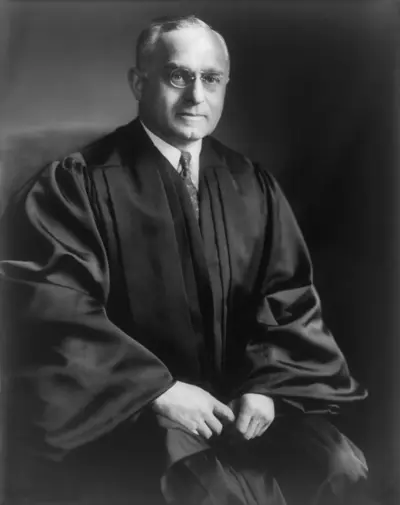
Felix Frankfurter was an American lawyer, professor, and jurist who served as an Associate Justice of the Supreme Court of the United States. Frankfurter served on the Supreme Court from 1939 to 1962 and was a noted advocate of judicial restraint in the judgments of the Court.
