Kenneth E. Boulding Quotes
In 1859 the human race discovered a huge treasure chest in its basement. This was oil and gas, a fantastically cheap and easily available source of energy. We did, or at least some of us did, what anybody does who discovers a treasure in the basement - live it up, and we have been spending this treasure with great enjoyment
Boulding, Kenneth E. "The Economics of the Coming Spaceship Earth." Environmental Quality in a Growing Economy, edited by Henry Jarrett, Johns Hopkins Press, 1966, p. 7.


His assertion that wind energy is less expensive than the fossil fuel alternative is not accurate if one accounts for the costs on the basis of conventional accounting methods. It was at that time more expensive which is why it’s use was limited. However, the existing methods of accounting did not charge the fossil fuels for the environmental degregation that they cause and the cost to society to overcome these or live with them. More important there is no charge to the cost of fossil fuels for the deleterious health effects that their extraction and use cause. Global warming / climate change is not considered at all in the economic analysis.

There are those who worry that we will run out of oil. However, as Khosla observes, the more immediate danger is the pollution of the planet’s air supply by burning fossil fuels like oil in large volumes.

Paul Douglas of Illinois was a world famous economist before he was elected to the Senate. He was a constant opponent of a tax loophole known as the "oil depletion allowance." Lyndon Johnson was a proponent of the allowance:. the home county of Chicago


Almost a century later dirty vegetable oils from fast food restaurants were used in Diesel truck and tractor engines very effectively and efficiently.
This was an amazingly prescient view of the future.


The American public did not accept the need for conservation during Carter’s administration. Carter and many people then thought the major problem was that we were running out of fossil fuels. With shale gas and other techniques there was much more fuel that was suspected. However, the real problem was clean fuel and carbon causing global warming. So wind, solar and other “clean” energy sources have become very inporantant.
Both the Freon used in air conditioners and the energy to run the air conditioning equipment (generated by fossil fuels) contribute to global warming. Therefore Cox observes that the more air conditioning we use the warmer the climate as a whole gets. And then we need more air conditioning to be comfortable. This in turn produces more warming and Cox argues were are in an endless cycle. However, while this is true, the incremental energy required to produce the additional cooling to offset the global warming is relatively small. What is the greater problem is if the billions of people who do not now have air conditioning want it and get it. That will require enormous additional energy which could produce substantially more global warming. It should be noted that the United States has already banned Freon in favor of coolants which do not attack the ozone layer. And if the energy for air conditioning were produced by clean energy—nuclear, thermal, wind, hydroelectric or solar, the whole problem is moot and there would be no problem with air conditioning. However, as long as we use fossil fuels, Cox’s point is well taken.

Many argue that they are hardly reflected at all. The reason is the governments pay for much of the real cost and spread the cost over its taxpayers. Some costs are not monetary—premature deaths from pollution or corruption in petroeconomic corrupt states. People just suffer.

See {635006} for a slightly earlier French solar engine. Much of the most effective uses of Solar power uses the concentrated heat of the sun to heat water or some other substance like this device. The vast majority of the hot water heaters in Israel function on this principle—no electricity or any other fossil fuel. The only reason that the solar engines of the time were more costly where fuel was available is that no one realized the huge environmental consequence of the fossil fuels. Today we do realize that but do not charge the oil and gas companies and consumers to cover the costs of fixing what we know about and are able to remedy. Solar powered equipment is not a modern invention however and has been with us for well over a century. Paul Collins wrote “He calculated that solar power cost about ten times as much as coal, so that until coal began to run out, solar power would not be economically feasible. But this, to him, was not a sign of failure—there was no question that fossil fuels would indeed run out someday. The great engineer maintained an unshakeable belief in the future of solar power to his last breath; he had set up a large engine in his backyard and was still perfecting it when he collapsed in early 1889. Though his doctor made him rest, Ericsson could not sleep at night: he complained that he could not stop thinking about his work yet to be done.” The only reason that the solar engines of the time were more costly where fuel was available is that no one realized the huge environmental consequence of the fossil fuels. Today we do realize that, but do not charge the oil and gas companies and therefore consumers cover the costs of fixing what we know about and are able to remedy. Solar powered equipment is not a modern invention however and has been with us for well over a century.

This quotation on the surface appears to be a clear summary of the scientifically measured negative aspects to coal. However, it was an extremely bitter political quotation. The reason was that West Virginia and the other parts of Appalachia depend on coal for employment—jobs for the residents in a poverty-stricken area where there are few other potential sources for employment. Coal is also a key economic component of the economy in Wyoming. These states regard the reduction of coal as an energy source as one of the most serious political threats to their states and the treat it accordingly. West Virginia has Democratic Senators and congressmen from Appalachia. Wyoming has Republicans. Both exert enormous pressure on their Congressional Party leadership and the White House. With the country and Congress split at the time, Republicans had control of the House, and Democrats, the Senate and the Presidency—by very narrow margins so the leaderships cannot offend anyone in Congress. The result is that there was almost total silence about the huge coal pollution problem, and even in the second decade of the 21st century, where shale natural Gas was extractable in sufficient quantities to totally replace Coal as a fuel source, few in Congress or the administration ever even spoke of adopting a national policy to this effect, much less passed any legislation. During this period many Americans sickened and died as a result of coal every year with no end in sight.

The “burn” referred to gasoline that is burned in automobiles.


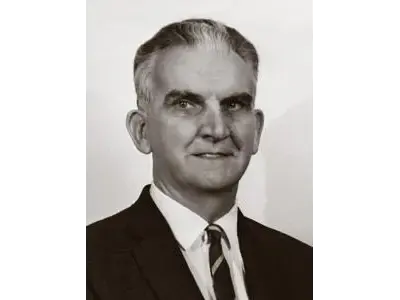
Kenneth Ewart Boulding was an English-born American economist, educator, peace activist, and interdisciplinary philosopher. Boulding was the author of two citation classics: The Image: Knowledge in Life and Society (1956) and Conflict and Defense: A General Theory (1962). He was co-founder of general systems theory and founder of numerous ongoing intellectual projects in economics and social science. He was married to sociologist Elise M. Boulding.
