Sabine Baring-Gould Quotes
In 1559, Duke Frederick III was summoned before the Emperor Ferdinand I at Breslau to answer the accusations of extravagance and oppression brought against him by the Silesian Estates and was deposed, imprisoned, and his son Henry XI given the Ducal crown instead.
Baring-Gould, Sabine. Historic Oddities and Strange Events. Methuen & Co., 1889, p. 112.

This was published after he died.


What is fascinating about this quotation is that England itself was an aristocracy with a monarchy and very few elements of fairness and equality. The aristocracy and the monarch very much used the system and the common people for their benefit. However, the degree of abuse and tyranny and absence of any sense of equity, shocked even this English aristocrat. Behoof was a Middle English word derived from words that mean to profit from. By the time he used it, it meant benefit or advantage—a slightly wider meaning, but even in 1591 it was not a commonly used words but one used more by the intelligentsia of the day.

The caliphate was abolished by the Turkish republic in 1924

He was executed for rebellion at age 29. However, a number of his followers went on to leadership positions in the reforms that followed. The Shogun was the military ruler of the country subject only to the Emperor. In the logic of Japan at the time one could call for revolution against the Shogun and not be disloyal to the Emperor.


Two years later they won an electoral majority.


Paine was totally wrong on this count. It is true that monarchy and aristocracy were never the same as they had been, but the American and French Revolutions were catalysts for the monarchs and aristocrats to reform. In a Darwinian sense, monarchy and aristocracy evolved, and the early members would hardly recognize the modern aristocracy of Britain and other European countries that still have them and the Constitutional monarchs of today have almost evolved into a new specie.
The Diggers were a religious-economic movement that even today would be considered very radical. They advocated the right of the poor to go onto public lands and farm them—thus the name “Diggers.” Beyond their opposition to the private ownership of land to the exclusion of the poor, Winstanley and the Diggers promulgated another very modern doctrine: That the poor should take the responsibility and have the right to determinine how the society should provide for the poor. A version of this became one of the Mottos of the Poverty Program of 1964. See {616966}.

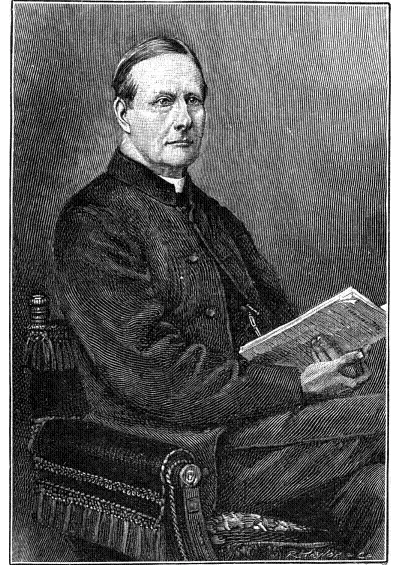
The Reverend Sabine Baring-Gould of Lew Trenchard in Devon, England, was an Anglican priest, hagiographer, antiquarian, novelist, folk song collector and eclectic scholar. His bibliography consists of more than 1,240 publications, though this list continues to grow. His family home, the manor house of Lew Trenchard, near Okehampton, Devon, has been preserved as he had it rebuilt and is now a hotel. He is remembered particularly as a writer of hymns, the best-known being "Onward, Christian Soldiers", "Sing Lullaby", and "Now the Day Is Over". He also translated the carol "Gabriel's Message" from the Basque language to English.
