Princess Margaret Quotes
I'm the heir apparent to the heir presumptive.
Brown, Craig. Ninety-Nine Glimpses of Princess Margaret. Farrar, Straus and Giroux, 2018.


This quotation tells us important facts about the Caliphate in Moorish Spain. First, the Caliphate was not always hereditary. In this case the Caliph was picking his own successor who was not of his own family. In addition, there was some meritocracy expected by the Muslim population. Hisham had to extol the virtue of his selection. Last, nobility and high birth was not an absolute requirement. Hisham tells the people that he has searched both the aristocracy and the commoners looking for the right candidate. Actually, the successor had none of the virtues attributed to him. He was a dishonest scoundrel of the worst sort. The Caliph was very weak, and Abd Al-Rahman al Sanchol not only persuaded the Caliph to name him successor, but many historians believe that al Sanchol actually wrote the proclamation that Hisham II read.


He had tripled the size of Rus, pulling together the disparate areas which had been under the thrall of the Golden Horde. The custom was when the Grand Prince died he left parts of his dominion to each of his sons and grandsons. However. Ivan changed that pattern and wanted one son to be the ruler over all of what was becoming a large unified state. After that his pattern was followed by all the Czars until the Russian Communist Revolution in 1917." Ivan the Great

He left no other reference to the line of succession. After his death, his sons fought it out unsuccessfully and the Mogul Empire fell apart.

The king would often walk alone or with only a few companions. His brother expressed concern about exposing the royal person to risk.


This treaty was an attempt to end the 100 Years War.

Gennadios II, 1400-1473, had been taken as a prisoner when the Ottomans captured Constantinople 3 days earlier. Despite the fact that there was doctrine that said that Islam should be the only religion, Mehmed—only 21 at the time—realized that he had to rule the city including the many Greek Orthodox and had Gennadios freed and personally invested him as the Petrarch of the Eastern Christian Church. Mehmed was particularly shrewd in his choice. Gennadios had been a strong opponent of the Union movement of Eastern and Western Christian Churches would end their schism and reunite. See {635099} for another notable who was vehemently opposed to Union. There were some Unionists among the defeated Christians who were still alive. The last thing strategically that the Ottoman’s wanted was for Union to have traction and the Eastern Christians of Constantinople looking to the Western Christians led by the Pope, the Holy Roman Emperor and the Christian European Kings for an alliance to eject the Ottomans from and retake Constantinople. The graphic depicts Mehmed investing Gennadios—a practice that was followed with each new Patriarch and the Sultan then in office. See {635084} for another quotation describing Ottoman pragmatic religious tolerance. One of Mehmed’s historical heroes was Alexander the Great who was able to rule most of the known world in large part because of his education by Aristotle advising him to be very tolerant of conquered people’s cultures, religious and otherwise. Mehmed, after his death, came under criticism from ultra orthodox Muslims including his own son and successor, for his religious tolerance and emulating a non-believer—Alexander the Great.


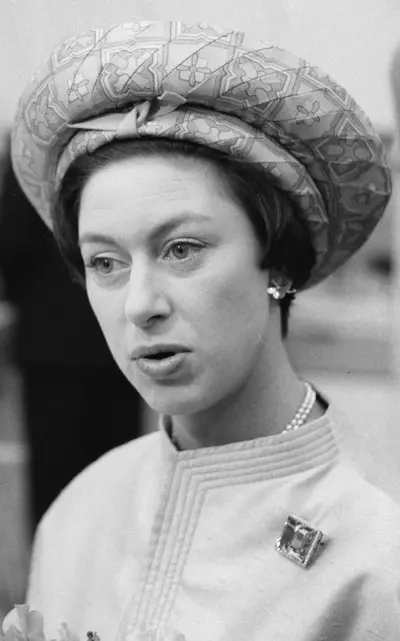
Princess Margaret, Countess of Snowdon, CI, GCVO, CD was the younger daughter of King George VI and Queen Elizabeth, and the only sibling of Queen Elizabeth II.
