Sam Ervin Quotes
I'm not going to let anybody come down at night like Nicodemus and whisper something in my ear that no one else can hear. That's not executive privilege; it is poppycock.
In the Watergate hearings the White House did not want to make information public but offered to communicate it privately to the Senator, the committee chairman.
Samuel J. Ervin Jr., 1896-1985, U. S. Congressman & U. S. Senator (Democrat, NC), Statement, Senate Watergate Hearings, 1973
Sourced by: Eigen's Political and Historical Quotations


This was one of the best confirmations that Nixon had authorized illegal activity to further his reelection prospects and then orchestrated a cover up of the crimes.


The Time Magazine Reporter, Hugh Sidey had just leaked the results of a Time poll to Kissinger, who promised to keep it to himself. The poll showed Nixon way ahead in the election. No sooner had Kissinger ended his conversation with Sidey than he shared the poll information with Haldeman. In this fascinating quotation Kissinger breaks his promise to Sidey, but lets Haldeman know that he is doing so. This is an example of the insight the Watergate tapes give us into political behavior where leading public officials think nothing about going back on their word, but they even gain esteem from their colleagues in doing so. It also illustrates a common but not very well known practice regarding leaking. The press not only utilize leaks from high administration officials but in many cases they return the favor and leak information about what stories they are working on, editorials coming or—as in this case—the results of polls. The leaking is not only one way in politics, but the press also leaks to increase the personal bond with the government leakers by reciprocating.


He was criticizing the George W. Bush Administration of his own party.

See {158152} for his view on secrecy in government.


Editorializing on Daniel D. Rostenkowski, U. S. Congressman (Democrat, IL) and Chairman of the House Ways and Means Committee:

This was a major extension of the Executive Privilege power from the President himself to the staff of the President as well.

Chief of the Ottawa Nation of Indians

Secretary of State William H. For a similar assessment of Seward see Morton S. Wilkinson.

The FBI director had become so powerful and unchecked by Congress or the President he used the FBI to assemble files on those whom he wanted including political figures. On many occasions he used these for various forms of blackmail, never for money, but to solicit compliance or support or obtain silence or cessation of opposition to positions he favored—especially the prerogatives of the FBI.
She and her husband had been flown across the country for a campaign fundraiser by a private businessman in his corporate jet. Republican Speaker of the House Dennis Hastert was also on the flight. Her husband was censured for an ethical violation but Hastert was not.
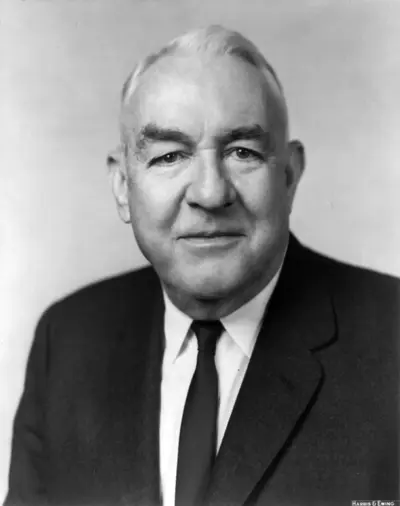
Samuel James Ervin Jr. was an American politician. A Democrat, he served as a U.S. Senator from North Carolina from 1954 to 1974. A native of Morganton, he liked to call himself a "country lawyer", and often told humorous stories in his Southern drawl. During his Senate career, Ervin was a staunch defender of the Jim Crow laws and racial segregation, as the South's constitutional expert during the congressional debates on civil rights. Paradoxically, he was also known for his support of civil liberties. He is remembered for his work in the investigation committees that brought down Senator Joseph McCarthy in 1954 and especially for his investigation of the Watergate scandal in 1972 that led to the resignation of Richard Nixon.
