Dwight D. Eisenhower Quotes
It is essential to efficient and effective administration that employees of the Executive Branch be in a position to be completely candid in advising each other on official matters ... it is not in the public interest that any of their conversations or communications, or any documents or reproductions, concerning such advice be disclosed.
Dwight D. Eisenhower, 1890-1969, 34th President of the United States (Republican, KS), U. S. News & World Report, May 28, 1954
Sourced by: Eigen's Political and Historical Quotations


The “gentleman” was a member of Congress. This is an issue between the Congress and the Executive Branch which has existed as long as our Republic: Whether all members of Congress should have access to all classified secret information of the Government. Mrs. Roosevelt who was usually an advocate of transparency, on this issue tended to side with the argument of the executive branch. Note that the arguments made in 1939 are still fought over today.


The notion of Executive Privilege developed over the years. Our first President thought nothing of giving the Senate access to all the papers and records regarding the negotiations of the treaty with Great Britain.

There are many things about our enemies which they know that we know which are still kept classified because it would be embarrassing for the government, a previous administration or to an agency to reveal it. There are some documents that are classified even thought the enemy knows we have the information because if the document were released the enemy might find out the sources of the information which they do not know. However often they know that too. Potential embarrassment and scandal are the main reasons for keepingthings that the enemy knoews we know secret.


This is a great example of Presidential stonewalling of Congress. The legislative branch is often exercising its oversight role and demanding executive department documents which for various reasons the President does not want the Congress to see. In this case, almost all attorneys would have said that the Congress was entitled to see the documents. This set a precedent of de facto Executive Privilege for war time. However, Congress very often has used their power of demanding documents for political and ideological reasons and not for the better functioning of the government. In the Eisenhower administration the concept of Executive Privilege was formalized to protect President Eisenhower and officials in the Executive Branch from the abuses and excesses of Joseph P. McCarthy who was a fanatic, ideologue and an alcoholic at the same time. See {595900}.

The issue was still not decided by the beginning of the 21st Century except that a certain amount of public disclosure was required if the company raised funds by selling stock to the public, but there were some giant corporations that were private and exercised huge power and influence and yet whose operations were secret.

At the time there was no Secrecy & Classification System nor any laws enforcing secrecy or confidentiality. However there was no freedom of information laws of expectations even on the part of journalists. This was the first Freedom of Information policy of the American government. Some politicians were more open than others but there was no national, governmental before this. There were however leakers and whistleblowers though the terms were not in use. Note that Roosevelt herein created the first whistle blower protection—himself.


Who does and does not get parole often depends more on politics and political contributions than on any issue of merit. Keeping all the records secret and the meetings closed allows much of this to happen. In Georgia, the politicians are so desperate to be sure that no one can determine the truth about parole decisions that they have passed a law that even the highest judges of the state cannot subpoena parole board records even if they are material and necessary for criminal or civil trials.

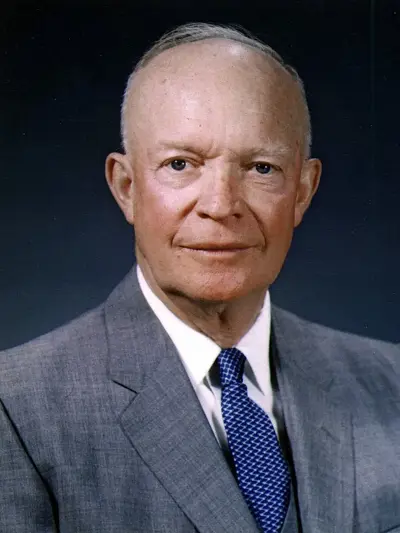
Dwight David "Ike" Eisenhower GCB OM GCS CCLH KC NPk was an American military officer and statesman who served as the 34th president of the United States from 1953 to 1961. During World War II, he became a five-star general in the Army and served as Supreme Commander of the Allied Expeditionary Force in Europe. He was responsible for planning and supervising the invasion of North Africa in Operation Torch in 1942–43 and the successful invasion of Normandy in 1944–45 from the Western Front.
