Harry Hopkins Quotes
I'm not going to last six months here, so I'll do as I please.
Assuming his duties as Emergency Federal Relief Administrator:
Harry Hopkins, 1890-1946, U. S. Secretary of Commerce (Democrat), Director, Works Progress Administration, Director, Federal Emergency Relief Administration, Special Assistant to the President, Quoted in Sherwood, Roosevelt and Hopkins, An Intimate Biography, Harper, 1950
Sourced by: Eigen's Political and Historical Quotations

3rd Viscount Palmerston. Lajos Kossuth was the Hungarian leader of anti-monarchists who were agitating for a Parliament. While many English people sympathized with Kossuth, his government, which had good relations with England, did not want any of the other European Governments to officially meet with him. It was considered insulting to a government if a friendly government met officially with a politician who was not approved by his own government. Palmerston, as Temple was referred to, wanted to show English sympathy with the reforms advocated by Kossuth. He was then the Foreign Minister and wanted to invite Kossuth to the Foreign Ministry. However the Cabinet had a meeting and voted against the idea which would not only inflame the Hungarian government, but would outrage all the other countries in Europe for this diplomatic insult. Palmerston then decided that he would meet with Kossuth in his private residence. When the Prime Minister discovered this plan, he sent a note by messenger telling Palmerston that he was the Foreign Minister and inviting Kossuth to his home could not be seen as an official action. Palmerston has his own political base and had enough supporters in Parliament that if he would be fired, he could bring down the coalition government. So in effect he told his Prime Minister off and dared Russell to fire Palmerston. Then he went ahead with the meeting. The cabinet was upset, Queen Victoria was outraged (she never cared for Palmerson as a Foreign Minister), the Newspapers had a field day, and all the European counties complained vehemently to the Queen and the Prime Minister. But Russell didn’t dare fire Palmerston at that point. However, with Queen Victoria’s shrewd political maneuvering and Russell coalescing support, he was able to demote Palmerson to Home Secretary and assume the Foreign Ministry himself in 1952. However, Palmerston had the final winning hand, when 3 years later, he was elected Prime Minister and he and the Queen had to make a rapprochement.


This quotation not only applies to business but also to Government programs and operations as well. Most government administrators, at the insistence of their government state goals and objectives which can be measured. Failure to make the goals of your plan has adverse consequences for the government executive—smaller budget, fewer people, less influence, promotions blocked. So most government as we; as private sector executives negotiate a plan that they can readily meet. But when the do meet the plan, the serious problems of society are still with us. They have failed in the second way. Culturally, that kind of failure is not so regarded by most and even brings praise and rewards. The first kind of failure—missing a plan that really could solve a major problem—is more negative for a person’s position and career in government and the private sector. Yet only by choosing plans that well might be missed, can we really make significant breakthroughs. See {633644} for an earlier, not as sophisticated, quotation on this theme.


Two of the 20th centuries greatest political leaders were Mao Tse-Tung and Franklin Delano Roosevelt. In most respects, these two were polar opposites. However, they had one characteristic in common. They were both willing to try things they were not certain of. If they succeeded, make it a part of the national program. If it failed, try something else. See FDR 52,743.


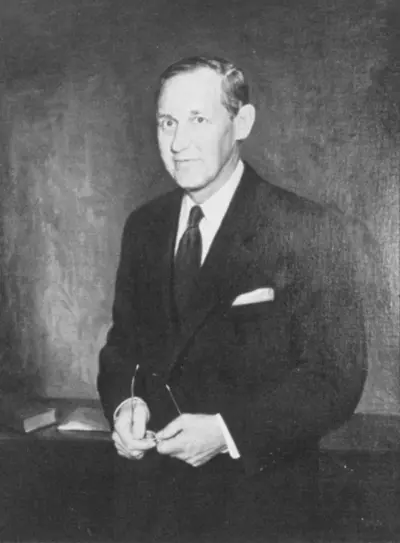
Harry Lloyd Hopkins was the 8th Secretary of Commerce, and President Franklin Delano Roosevelt's closest advisor on foreign policy during World War II. He was one of the architects of the New Deal, especially the relief programs of the Works Progress Administration (WPA), which he directed and built into the largest employer in the country. In World War II, he was Roosevelt's chief diplomatic troubleshooter and liaison with Winston Churchill and Joseph Stalin. He supervised the $50 billion Lend-Lease program of military aid to the Allies.
