Rick Atkinson Quotes
I'm going to leave WWII. I considered and rejected doing something on the Pacific. Fourteen years is enough. I'd like to take on a different challenge and probably a different era. But it will be another war. It's what I do.
Atkinson, Rick. "I am Rick Atkinson, Pulitzer-Prize winning author of The Liberation Trilogy. AMA." Reddit, 15 May 2013.


There were a number of world leaders who were not happy about the German Reunification. See Henry Kissinger {610355} for another.


In the American democracy the tradeoff between military activity and respect for human rights has always been an issue.


In the earliest prediction of the World War II conflict between America and Japan:


Unusually for a scientist, Szilard was politically very astute. In this letter he predicted exactly what was going to happen in Europe which would be WWII. He was the leading scientist organizing the lobbying efforts with the Franklin D. Roosevelt administration to develop an atomic bomb.

Theodore Roosevelt was the Presidential nominee. Johnson was a leader of some members of Congress some of whom were extreme isolationists and some of whom were Nazi sympathizers and Hitler admirers. When the Japanese attacked Pearl Harbor later that year, Germany, fulfilling its treaty with Japan, declared war on America, Johnson’s group no longer mattered. Before WWII most Republicans were opposed to Defense Spending and accused the Democrats of being war hawks. After WWII, they flip flopped and became more hawkish than the Democrats who they accused of being soft on defense for years thereafter. See {631380} for President Roosevelt’s different view.

Eisenhower was then Supreme Allied Commander.


Right wing conservatives were not always in favor of large defense expenditures. Prior to WWII most were opposed to defense spending and they were the pacifists. Clark was one of the few that maintained this view after WWII.


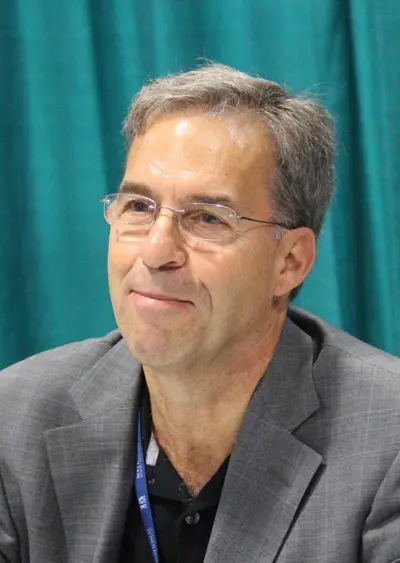
Lawrence Rush "Rick" Atkinson IV is an American author, most recently of The British Are Coming: The War for America, Lexington to Princeton, 1775–1777, the first volume in the Revolution Trilogy. He has won Pulitzer Prizes in history and journalism.
