Elizabeth Gaskell Quotes
I'll not listen to reason... reason always means what someone else has got to say.
Gaskell, Elizabeth. Cranford. Chapman & Hall, 1853.


Barstow the Democratic Governor who had no serious opposition in 1853 found himself challenged for reelection by Coles Bashford of the new Republican Party. The Board of Canvassers reported that Governor Barstow had won reelection but by less than 200 votes in the whole state. The Republicans charged that there had been fraud in some of the rural districts and petitioned the Wisconsin Supreme Court which ruled that nonexistent precincts had indeed voted for the Governor. Barstow however refused to recognize the decisions of the court claiming that the court had no jurisdiction over the Board of Canvassers who were part of the executive branch. The Republicans held their own inauguration and two men claimed to be Governor. But the Governor claimed that the state constitution did not give the court any authority to deal with the crisis, He even called out the State Militia to maintain his office and intimidate the Supreme Court and keep the “other governor” from the state house. Nonetheless the court ruled that even the Governor had to obey the law and the Supreme Court would determine what the law was. Barstow finally “resigned.” See {587915} & {587917}.


As Secretary of State, Powell was going to address the UN Security Council on the 5th and he was coordinating his speech with the other agencies of the government. His criterion was that he only wanted to make accusations that were backed up by incontrovertible evidence. However, VP Richard Cheney and his aide, Scooter Libby, kept inserting an accusation that Iraq was involved with and supported Al Qaeda. This was one of the many speculations that those who wanted to justify attacking Iraq kept using as Domestic propaganda. When Powell asked for proof or intelligence reports and none could be provided, he removed the accusation from the speech explaining why. However, at the last minute, Cheney and his staff put the accusation back in, and that triggered the quotation. Unfortunately, Powell was so busy fending off totally absurd accusations, that he accepted the CIA assurances {79468} that Iraq was developing nuclear weapons that were about to be operationalized and never heard from those who questioned the credibility of the sources for the basic accusation. Powell had great trust among the diplomats of the world then gave the United States version to the Security Council and justified our coming invasion of Iraq. But the intelligence report, despite the assurances of the CIA and the Vice President, was false and Iraq not only was not close to a nuclear weapon but he had no program at all at that time to try and develop one. Powell resigned and his credibility about the world was ruined as he was then seen as just another lying politician.

She had asked Woodward when all the details about Richard Nixon and Watergate would finally be known. Woodward replied, “Never.”


On his trip to Germany, Reagan was invited to lay a memorial wreath at the German military cemetery in Bitberg. His staff assistant Michael Deaver had set the trip up but did not know that German Waffen SS Officers were also buried at the cemetery along with the far more numerous Wehrmacht. American Jews and Veterans Groups protested this honor to the SS murderers of millions of people including American prisoners of war. The proposed trip was covered very heavily by the press and editorials throughout the country called for the President to cancel the cemetery part of his trip. He did not. This quotation shows how symbols can take on a meaning that was never intended by the parties.


Alvarez was one of the key physicists who developed the atom bomb and was the scientist selected to accompany the plane bombing Hiroshima. There was considerable friction in the Manhattan Project development of the bomb between the scientists and the military.

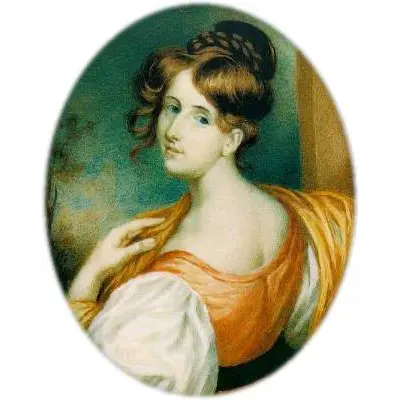
Elizabeth Cleghorn Gaskell, often referred to as Mrs Gaskell, was an English novelist, biographer and short story writer. Her novels offer a detailed portrait of the lives of many strata of Victorian society, including the very poor. Her work is of interest to social historians as well as readers of literature. Her first novel, Mary Barton, was published in 1848. Gaskell's The Life of Charlotte Brontë, published in 1857, was the first biography of Charlotte Brontë. In this biography, she wrote only of the moral, sophisticated things in Brontë’s life; the rest she left out, deciding that certain, more salacious aspects were better kept hidden. Among Gaskell's best known novels are Cranford (1851–53), North and South (1854–55), and Wives and Daughters (1865), each having been adapted for television by the BBC.
