Alan Dershowitz Quotes
If you're a prosecutor, and you believe the defendant is guilty, you only talk about ultimate truth, but not intermediate truth. If you're the defense attorney, you care deeply about intermediate truth, but you tend to neglect ultimate truth.
Dershowitz, Alan. Reasonable Doubts: The Criminal Justice System and the O.J. Simpson Case. Simon & Schuster, 1996, p. 38.


This is one of the many statements of President Bush that contributed to his reputation as a polarizing politician. His supporters turned to this statement to illustrate that Bush was a supporter of the Constitution and civil liberties by urging the nation not to engage in vigilantism or give vent to their stereotypic views of minorities. Detractors took the same statement as a perfect example of Bush’s assault on Constitutional freedoms. Law enforcement does not determine guilt or innocence in our system. Police and prosecutors in America do not determine guilt or innocence; juries do. They argue that the Bush administration law enforcement policies are designed to have law enforcement usurp more and more of this facet of criminal justice.


This clause is a real puzzlement to non-Muslims throughout the world. What it means is that a person is allowed to murder certain other people—the “blood” was permitted. These include homosexuals, heretics. blasphemers, and those individuals who have had Fatwas—Islamic legal opinions—calling for their death as enemies of Islam. So if a Muslim cleric issues a fatwa calling for the death of someone, anyone who can kill the person will be exonerated. Under Sharia, a Muslim who murders his own daughter or sister because she violated the sexual taboos of Islam, is exonerated because in this case the blood of the victim was permitted. It is the same for murdering a homosexual, or someone who converts from Islam to Christianity.

Reaction to the indictments of several of his political associates who were subsequently convicted after this statement:

This quotation is a great example of the difficulty of deciding some of the major Constitutional issues. Most reasonable people believe that Rehnquist certainly has a point. On the other hand, critics observe that this quotation essentially says that it is OK to convict an innocent person if it cost too much or be too much trouble to do so. Reasonable people would also agree that this objection has much merit also. So the judicial system is stuck with deciding when the cost or trouble is too much. There will never, can never, be a clear cut answer.


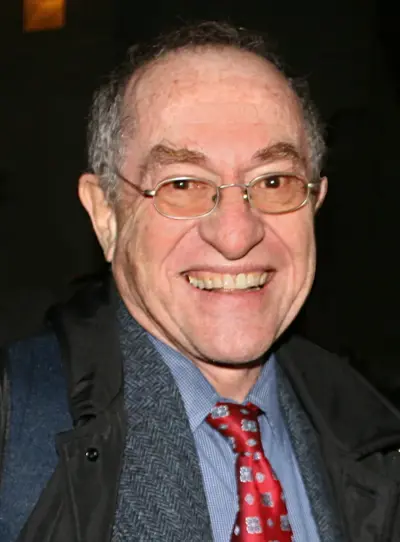
Alan Morton Dershowitz is an American lawyer known for his work in U.S. constitutional law and American criminal law, and for controversial political views.
