Michael Pollan Quotes
If you fill your Agriculture Committee with representatives of commodity farmers, and you don't have urbanites, you don't represent eaters, okay? You don't have people from New York City on these committees, you are going to end up with the kind of farm bills we have: a piece of special interest legislation.
Pollan, Michael. The Omnivore's Dilemma: A Natural History of Four Meals. Penguin Press, 2006.


She advocates cutting out more of the middle men in the food chain and having the farmer earn more money. One difficulty with her idea is that the vast majority of farming today is done by large corporations who are already making a good deal of money and consumer groups do not want to further enrich these corporations at the expense of the consumer. However by buying directly from the small farmer who grows particularly good food, she can accomplish the objective on a small scale.

Actually, Kerry was incorrect, but he had a point, There are about 110,000 employees of the U. S. Department of Agriculture and every state has their own department of Agriculture with employees. There are about 2 million farms in America. So there is a government agriculture employee for about every 15 farms—a ratio that no other occupation shares.


Inscribed in the South Lunette of the Library of Congress


At the time the vast majority of Americans were farmers. That is the tradition and reality which caused the Department of Agriculture to become one of the most important cabinet departments. However, by the 21st century the Department of Agriculture had over 100,000 employees plus many more consultants and contractors. They had done their job so well that productivity eliminated the need for most of the farms. And the number of people earning the majority of their living as farmers is less than 1 million. So there are only 10 farmers for each employee of the Agriculture Department.


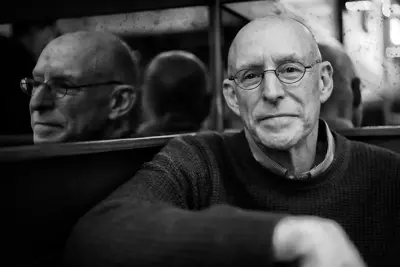
Michael Kevin Pollan is an American author and journalist, who is currently the Knight Professor of Science and Environmental Journalism at the UC Berkeley Graduate School of Journalism.
