Joseph Heller Quotes
If you expect democratic government will be efficient government, you will be disappointed.
Joseph Heller, 1923-1999, Writer, Bill Moyers' World of Ideas, September 26, 1988
Sourced by: Eigen's Political and Historical Quotations


Dr. Chee decided to run against the Goh Chok Tong, Prime Minister of Singapore in his own district. Chee actually got 25% of the vote in his first foray into politics. But efficiency won. He was fired from his job at the National University on trumped up charges. When he denounced the charges as false, he was sued for libel.


This quotation had a close proximity to Lincoln’s Gettysburg Address (see linked quote). Although this was probably Lincoln's most famous line, it was not totally original. John Adams came close in a 1774 proclamation (see linked quote). As did John Marshall in his McCulloch v. Maryland decision (see linked quote). There was also Thomas Cooper in 1795 (see linked quote). But the earliest close phrase use appears to be the English cleric, John Wycliffe, in 1382 (see linked quote). It is not known with which of these Lincoln was familiar.

The Prime Minister was coping with a scandal where there was an incident where British soldiers had abused Iraq prisoners of war. They were being held to account criminally.


Business has trouble coping with uncertainty. The short term advantage of fascist states is that they can provide what appears to be more certainty. The Chinese communist system has a similar governmental control, hence Mr. Lo’s preference. Of course the big risk is that dictatorial governments without freedom may collapse or be over thrown. As much as many businesspeople prefer the certainty of totalitarianism, the has been far more business success in the democracies of the world and the U. S. alone with its uncertainty has produced more profits than all the dictatorships and autocracies in history put together.

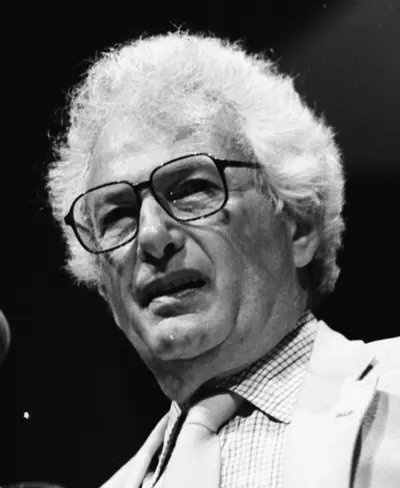
Joseph Heller was an American author of novels, short stories, plays, and screenplays. His best-known work is the 1961 novel Catch-22, a satire on war and bureaucracy, whose title has become a synonym for an absurd or contradictory choice.
