George Washington Quotes
If we remain one people, under an efficient government, the period is not far off when we may defy material injury from external annoyance; when we may take such an attitude as will cause the neutrality we may at any time resolve upon to be scrupulously respected; when belligerent nations, under the impossibility of making acquisitions upon us, will not lightly hazard the giving us provocation; when we may choose peace or war, as our interest, guided by justice, shall counsel.
Washington, George. "Farewell Address." A Compilation of the Messages and Papers of the Presidents, 1789-1897, edited by James D. Richardson, vol. 1, Government Printing Office, 1896, p. 222.


This seems to be the origin of the notion that democracies and republics are less likely to war with others than monarchies or dictatorships.

While to Madison the principle that “war is better than tribute” was “settled policy”, there were many who disagreed. See {640867} as an example.


Chamberlain’s policy was to appease Hitler and Germany to avoid war. Although he did not see Czechoslavkia as a critical British national interest and claimed he had secured peace {585941} , the reality was that he gave Germany room to start its aggression which would engulf all of Europe and much of the world. The British became the only bulwark against Hitler until the Russians stopped the Germans and America entered the war.


Holland was then a Republic and federation of the separate states. Each elected representatives to the ruling legislature, however, many states had not been pleased that their representatives did not reflect the desires and public opinion in the individual states and in some cases took bribes to vote in favor of special interests. The Dutch did NOT want their representatives to use their own judgment but wanted them to seek and follow the instructions of the legislatures of each state.


Britain was mired in Iraq. They had, as the U. S. would do about 80 years later, gone into Iraq without a viable exist strategy.

The issue of who has the right to declare war was not only a contest between Congress and the President, but it was not at all clear that individuals and groups of individuals who felt aggrieved or who could profit from a war could not start one on their own. Jefferson had established the principle that individual groups could not start a war. Earlier Jefferson’s administration had prohibited Americans from fighting in foreign wars and this was the next logical step. However, the right of a state to initiate hostilities was less clear and in the War of 1812, seven years later, state militia were committed by state governors without the necessary concurrence of the Federal government.
War had broken out in Europe and Jefferson enumerated a series of actions so that the United States would remain neutral. He was concerned that individual Americans would partake in foreign wars and then be captures of have to be ransomed or would give offence to some other nation who would assume that the American was acting with government approval and was allied with an enemy. The issue of American mercenaries fighting in foreign conflicts has been controversial ever since.
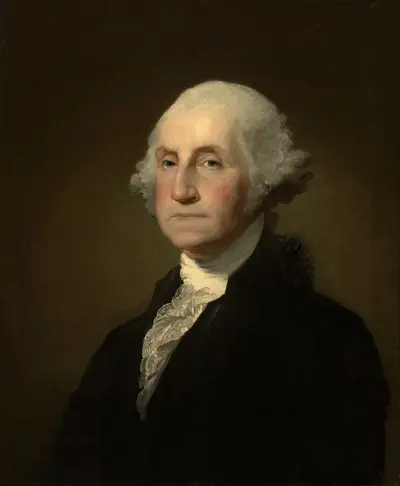
George Washington was the first President of the United States (1789-97), the Commander-in-Chief of the Continental Army during the American Revolutionary War, and one of the Founding Fathers of the United States. He presided over the convention that drafted the current United States Constitution and during his lifetime was called the "father of his country".
