William Pitt the Younger Quotes
If we mean seriously to unite the nation within itself, we must convince them that their complaints are regarded, that their injuries shall be redressed. On that foundation I would take the lead in recommending peace and harmony to the people. On any other, I would never wish to see them united again. If the breach in the Constitution be effectually repaired, the people will of themselves return to a state of tranquillity; if not, may discord prevail forever
William Pitt, 1708-1778, 1st Earl of Chatham, British Prime Minister, Secretary of State, Lord Privy Seal & leader of the House of Commons, Debate, House of Lords, January 22,1770
Sourced by: Eigen's Political and Historical Quotations

The “mystic chords of memory” which is one of the most famous Lincoln phrases. As great as this address was, it did not succeed in its purpose of maintaining the Union and preventing secession.


Previously the Federalist Party had virtually self-destructed in ideological bickering and partisanship, even throughout the War of 1812.


This famous quotation, from this important address, at such a critical time in history has been admired for years. Despite his great oratory, the next months were to see almost 2 million Indians of all faiths killed in what was probably the worst internecine violence in human history. Ironically, the politically motivated terrorism had stopped since all the decisions had been made. The motivation for the frightful atrocities that took place from then on was vengeance and fear of more vengeance." 1st Earl Mountbatten of Burma

Gerald Ford, who had never run nationally for office, succeeded to the presidency upon the resignation of Richard Nixon. While generally competent and extremely gracious, in the wake of Watergate he lost his only presidential election contest to Jimmy Carter in 1976:


The Diggers were a religious-economic movement that even today would be considered very radical. They advocated the right of the poor to go onto public lands and farm them—thus the name “Diggers.” Beyond their opposition to the private ownership of land to the exclusion of the poor, Winstanley and the Diggers promulgated another very modern doctrine: That the poor should take the responsibility and have the right to determine how the society should provide for the poor. A version of this became one of the Mottos of the Poverty Program of 1964. See {616966}.


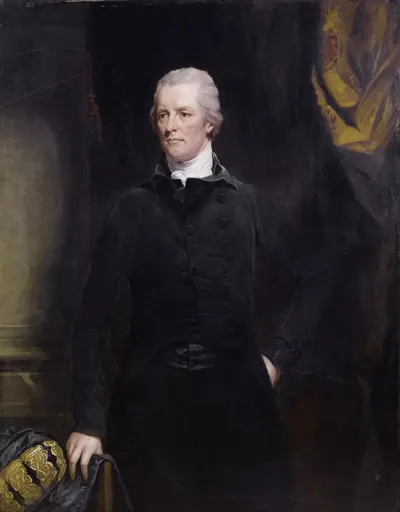
William Pitt the Younger was a prominent British Tory statesman of the late eighteenth and early nineteenth centuries. He became the youngest prime minister of Great Britain in 1783 at the age of 24 and the first prime minister of the United Kingdom of Great Britain and Ireland as of January 1801. He left office in March 1801, but served as prime minister again from 1804 until his death in 1806. He was also Chancellor of the Exchequer for all of his time as prime minister. He is known as "the Younger" to distinguish him from his father, William Pitt, 1st Earl of Chatham, who is customarily referred to as "William Pitt the Elder" (or less commonly, simply "Chatham") and had previously served as prime minister.
