James Monroe Quotes
Equally gratifying is it to witness the increased harmony of opinion which pervades our Union. Discord does not belong in our system.
Previously the Federalist Party had virtually self-destructed in ideological bickering and partisanship, even throughout the War of 1812.
James Monroe, 1758-1831, 5th President of the United States (Democratic Republican, VA), Spech regarding partisanship, 1817
Sourced by: Eigen's Political and Historical Quotations

The Iroquois had a very successful confederacy of 6 tribes in a relatively democratic government with a written constitution. They dominated the Eastern part of North America for years. The were able to maintain a permanent unity with a unified and decentralized combination of government—much like the United States would become. At the time of this advice, each American colony was a government unto itself. The three Iroquois Indian delegates were Canassatego, Tachanoontia, and Gachradodow.


The “mystic chords of memory” which is one of the most famous Lincoln phrases. As great as this address was, it did not succeed in its purpose of maintaining the Union and preventing secession.


“Factions” was the word for Political Parties then. Henry, George Washington and other founding fathers were opposed to political parties, while Madison and others thought they needed to controlled. Jefferson thought parties to be important. So there was no uniform consensus among the Founding Fathers. This has his last public speech before his death.


See {640107} for another quotation creating this so called union. It made great sense to the King, but little to the Poles and Lithuanians who each saw themselves as a very different people and wanted little to so with the other.


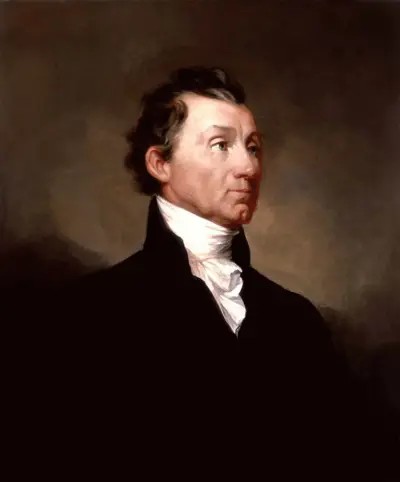
James Monroe was an American statesman, lawyer, diplomat and Founding Father who served as the fifth president of the United States from 1817 to 1825. A member of the Democratic-Republican Party, Monroe was the last president of the Virginia dynasty; his presidency coincided with the Era of Good Feelings. He is perhaps best known for issuing the Monroe Doctrine, a policy of opposing European colonialism in the Americas. He also served as the governor of Virginia, a member of the United States Senate, the U.S. ambassador to France and Britain, the seventh Secretary of State, and the eighth Secretary of War.
