McGeorge Bundy Quotes
If we guard our toothbrushes and diamonds with equal zeal, we will lose fewer toothbrushes and more diamonds.
McGeorge Bundy, 1919-1996, Presidential Assistant for National Security (Democrat), Congressional testimony, Quoted in New York Times, March 6, 1989
Sourced by: Eigen's Political and Historical Quotations


This instruction referred to the illegal COINTELPRO program whereby FBI Director Hoover not only ordered the FBI to illegally spy on African American organizations, but actually interfere with their operations and by leaking personal sexual information and trying to ruin the reputations of numerous Black leaders including Rev. Martin Luther King. See {584581}. This illegal program actually specifically named and targeted the Student Nonviolent Coordinating Committee, the Southern Christian Leadership Conference, Congress of Racial Equality, and the Nation of Islam. Hoover ordered that the program be kept secret. However, in what is a humorous historical twist, a civil rights organization organized a “black bag” burglary—the same kind of illegal break in that the FBI had been practicing against Black groups and others—broke into an FBI field office and stole this and other documents which they then made public. Otherwise the contents of this program might never have come to light.


The “wrong” people to Helms. Were Americans who disagreed with his methods and politics—especially members of Congress who wanted to make the CIA more accountable for its actions. If nothing is ever written down and everything is secret, there is no practical way of holding the agency accountable in a democracy. Helms was later convicted to perjury for lying to Congress.

The largest refinery also in Houston did not have a single armed guard on duty.


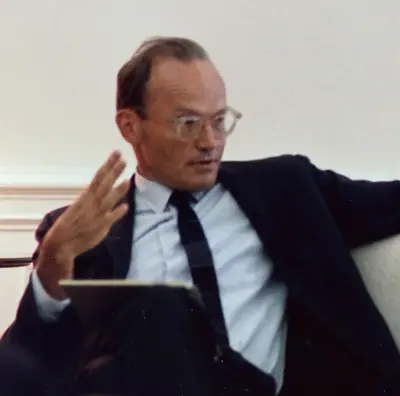
McGeorge "Mac" Bundy was an American academic who served as United States National Security Advisor to Presidents John F. Kennedy and Lyndon B. Johnson from 1961 through 1966. He was president of the Ford Foundation from 1966 through 1979. Despite his career as a foreign-policy intellectual, educator, and philanthropist, he is best remembered as one of the chief architects of the United States' escalation of the Vietnam War during the Kennedy and Johnson administrations.
